Growing a beard is the easy part. Keeping it soft, neat, and comfortable is where most guys run into trouble. Dryness, itching, flakes, a rough texture, and uneven edges are some of the most common complaints, and they usually trace back to a routine that’s missing a step or has too many of them.
I wrote this ultimate beard care guide for beginners and for guys who’ve had a beard for years but never really settled on a routine. It covers the core products and tools, how to build a simple men’s beard care routine, how to match products to your beard and skin, and which marketing claims deserve some skepticism, especially the ones about growth.
This post contains affiliate links. If you purchase through them, I may earn a small commission at no extra cost to you. I only recommend products I believe are genuinely worth considering.
What Is Men’s Beard Care?
Men’s beard care is the set of habits and products that keep your facial hair and the skin underneath it clean, comfortable, and presentable. It’s more than trimming. A good routine usually covers:
- Cleaning the beard and the skin under it
- Keeping facial hair feeling soft and manageable
- Combing or brushing to detangle and style
- Trimming for shape and clean edges
- Choosing products that match your beard length, texture, skin type, and preferences
The American Academy of Dermatology (AAD) makes a point I find useful: healthy-looking facial hair starts with healthy skin, and skin problems can develop under a beard whether it’s close-cropped or full. That’s why I’d rather think of beard care as skin care with a hair component than as a styling exercise.
A more complicated routine isn’t automatically a better one. The goal is finding a practical routine you’ll actually follow.
Essential Beard Care Products Every Man Should Know
Here’s what each core product does, who tends to benefit from it, and when it’s worth considering.
| Product | Main Purpose | Who May Benefit Most |
|---|---|---|
| Beard wash | Cleansing | Nearly anyone with a beard |
| Beard oil | Conditioning, softness | Beards that feel dry or coarse |
| Beard balm | Conditioning plus light hold | Longer beards, flyaways |
| Beard trimmer | Length, shape, clean edges | Anyone maintaining their own beard |
| Brush or comb | Detangling, styling, spreading product | All beard lengths |
Beard Oil
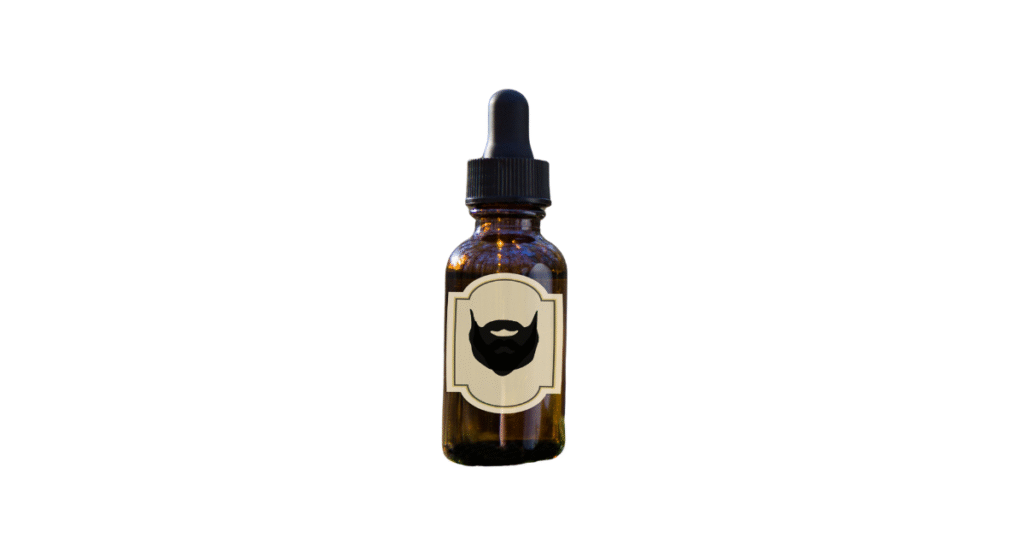
Beard oil is a conditioning product, usually a blend of oils, applied to the beard and the skin beneath it. Its main job is helping facial hair feel softer and less dry. I’d treat it as a grooming product, not a growth product. Beard oil doesn’t promise thicker or faster-growing facial hair, and any brand implying otherwise deserves some skepticism.
It’s also worth knowing that dermatology sources, including Yale Medicine, suggest guys who break out easily may want to think twice about adding beard oil. If you’re acne-prone, introduce it cautiously. To compare options and ingredients, I go deeper in Best Beard Oils for Men.
Beard Balm
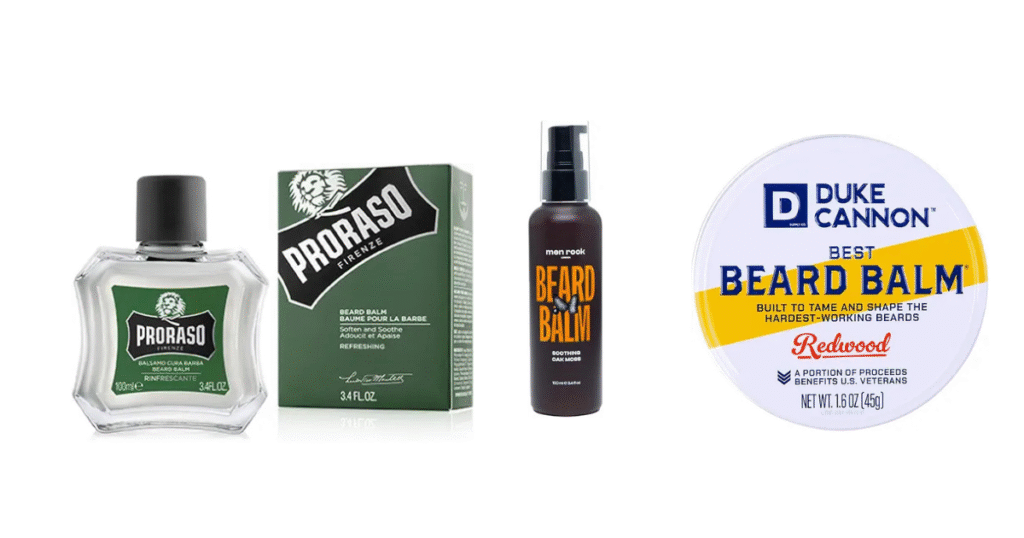
Beard balm is thicker than oil, typically combining conditioning ingredients with a bit of wax or butter for light hold. It’s useful for taming flyaways and shaping a longer beard. The tradeoff is that it can feel heavier, and applying too much can leave a beard looking greasy. If you’re deciding between oil and balm, I’d think of oil as conditioning and balm as conditioning plus styling control. More on choosing between them in Best Beard Balms for Men.
Beard Wash
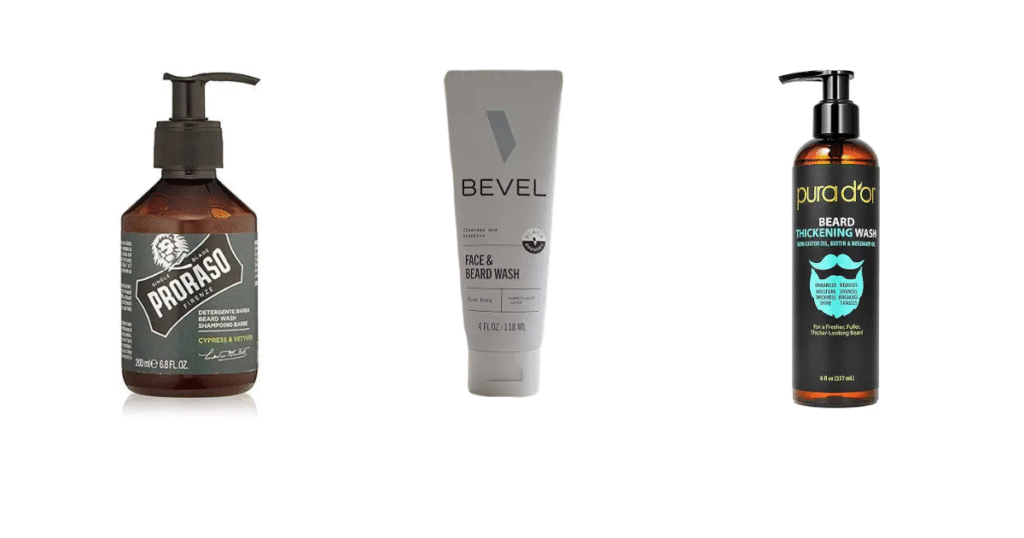
A beard-specific cleanser removes dirt, excess oil, sweat, and product buildup. The AAD’s dermatologists recommend a gentle, fragrance-free, non-comedogenic cleanser massaged into the skin and beard in circular motions, then rinsed thoroughly. How often you need to wash depends on your skin, your beard, your activity level, and how much product you use. I wouldn’t tell anyone they must wash their beard every single day. I’d pay attention to how your skin and beard feel. If you want to compare formulas, see Best Beard Washes for Men.
Beard Trimmers
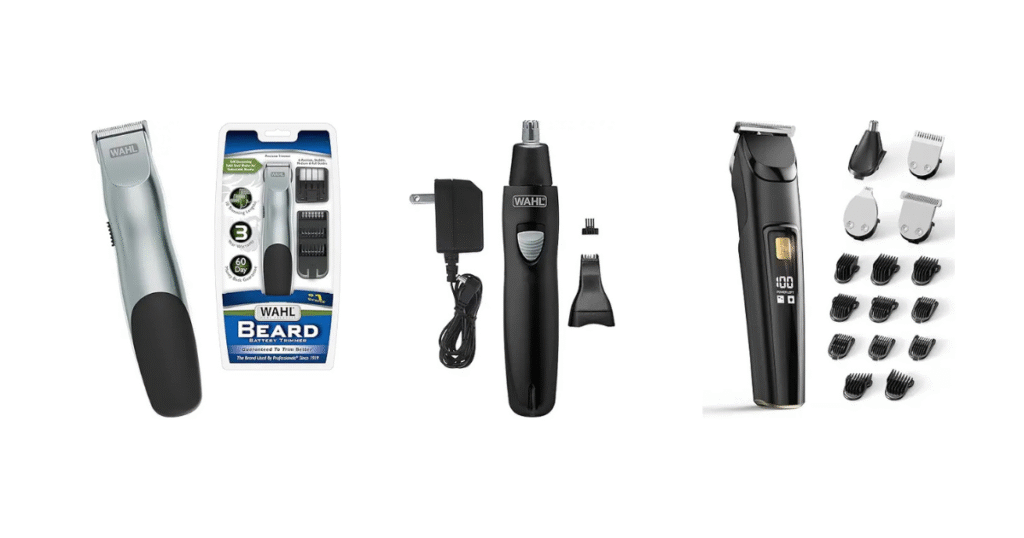
A beard trimmer maintains length, shape, and clean edges. The features I’d weigh are adjustable guards, battery life, blade quality, how easy it is to clean, and how comfortable it is to hold. A trimmer that doesn’t suit your beard length is a more common problem than a trimmer that’s simply “bad.” For a full breakdown, I cover buying criteria in Best electric Trimmers for Men.
Beard Growth Products
Products marketed for beard growth are a different category from conditioning products, and it’s worth keeping them separate in your head. I cover this in detail in its own section below, because it’s where marketing most often outruns evidence. For now: I wouldn’t buy anything on the assumption that it will stimulate new hair growth. See Best Beard Growth Products for Men for how I’d evaluate those claims.
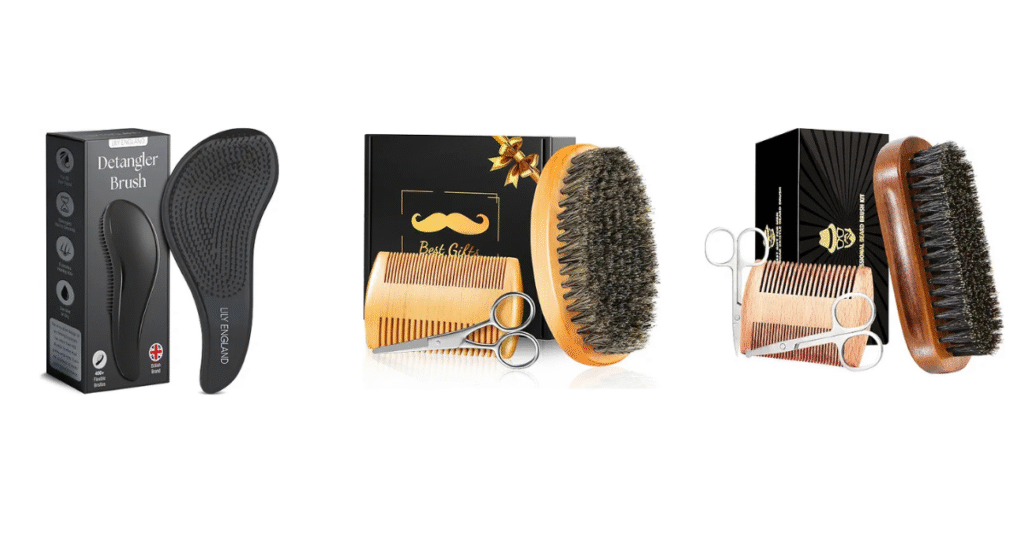
Beard Brushes and Combs
Both help detangle, spread product evenly, and style, but they behave differently:
- Combs are better for detangling and for shaping, especially while the beard is damp. The AAD’s dermatologist advice is to detangle and style with a beard comb while facial hair is still wet.
- Brushes are good for spreading oil or balm and smoothing the overall look, particularly on medium-to-long beards.
Beard length and texture should guide the choice. A short beard may only need a small comb, while a longer, thicker one often benefits from using both.
How to Build a Simple Men’s Beard Care Routine
You don’t need every product on the shelf. Here’s a routine you can adapt.
Morning Beard Care
- Check the beard for tangles and stray hairs.
- Apply a small amount of beard oil if your beard tends to feel dry.
- Add beard balm only if you want extra control or light hold.
- Brush or comb gently from the neckline upward and outward.
- Check the neckline and cheek line, and tidy only if needed.
Start with less product than you think you need. You can always add more, but you can’t easily take it away.
Washing and Conditioning Your Beard
Use a suitable beard wash, work it through the beard and onto the skin underneath, and rinse thoroughly. Leftover product can contribute to irritation and a dull look. Pat the beard dry rather than rubbing, then apply your conditioning product while it’s slightly damp if that works for you.
How often to wash depends on dryness, oiliness, sweat, and buildup. Someone who works outdoors or trains hard may want to cleanse more often than someone at a desk. If your beard or skin feels tight or dry after washing, that’s a sign to scale back or switch to something gentler.
Weekly Beard Maintenance
- Check length and shape, and trim if you want to keep the style crisp
- Clean your combs, brushes, and trimmer according to the manufacturer’s instructions
- Look at the skin under your beard for redness, flaking, or irritation
How often to trim depends on your growth rate, your style, and your preference, so I wouldn’t treat any schedule as universal.
How to Choose the Right Beard Products for Your Needs
Instead of buying what’s popular, I’d start with what your beard and skin are actually doing.
For Short Beards
Keep it simple: gentle cleansing, a suitable trimmer, and optional conditioning. Short beards often don’t need balm at all.
For Long or Thick Beards
Detangling matters more here. A comb and brush, regular conditioning, and some shaping help manage flyaways and keep things from looking unruly.
For Dry or Coarse Beards
Conditioning products help, but I’d also avoid washing too aggressively, since stripping oils makes dryness worse. Choose products that leave the beard feeling comfortable rather than waxy or heavy.
For Oily or Acne-Prone Skin
Pay attention to the skin under the beard. Use products that suit your skin and avoid piling on oils or balms. I wouldn’t claim any ingredient is guaranteed to prevent breakouts. If acne is persistent, a dermatologist is the better route.
For Sensitive Skin
Check ingredient lists, especially for fragrance, and introduce new products one at a time so you know what caused a reaction. Stop using anything that causes irritation.
How to Maintain a Beard and Keep It Looking Neat
A neat beard mostly comes down to restraint:
- Pick a shape you’ll actually maintain. An overly sharp style takes more upkeep.
- Trim gradually. Start with a longer guard and work shorter. You can always take off more, but you can’t put it back.
- Don’t over-trim the neckline and cheek line. Cleaning up stray hairs is different from redrawing the whole beard.
- Use the right guard for the length you want, and check it before you start.
- Keep tools clean and follow the manufacturer’s care instructions for blades.
- Go easy on pulling, harsh brushing, and heavy product use.
I also wouldn’t promise that any particular beard style suits every face shape. That’s a matter of preference, and plenty of guys experiment before settling on a look.
Beard Problems and How to Manage Them
Beard Itch
Itching can come from dryness, irritation, product sensitivity, or newly growing hair. Gentle cleansing and suitable conditioning help in many cases. But beard itch can also stem from other issues, such as folliculitis or contact dermatitis, so if it’s persistent or severe, it’s worth getting evaluated rather than guessing.
Beard Dandruff and Flaking
Flakes in a beard can have different causes. Dryness is one, and seborrheic dermatitis, the same condition behind many cases of scalp dandruff, is another, according to Yale Medicine’s dermatology guidance. I can’t tell which applies to you, so I wouldn’t try. Gentle care is a reasonable start, but if flaking persists, worsens, or comes with redness or pain, talk to a healthcare professional.
A Rough or Tangled Beard
Conditioning products, gentle detangling (ideally when damp), and less friction usually make a noticeable difference. Rough beards are often under-conditioned or over-washed.
Patchy Beard Growth
Genetics, age, and individual growth patterns affect beard density. I wouldn’t tell anyone that oils, balms, supplements, or cosmetic products will fill in patches. If you notice sudden changes in hair growth or other concerning symptoms, medical advice is the right move.
One more point worth knowing: Yale Medicine’s guidance notes that skin problems under a beard aren’t always just ingrown hairs or acne, and it recommends having beard bumps evaluated by a board-certified dermatologist when you’re unsure what they are.
Do Beard Growth Products Actually Work?
This is where I’d slow down and be careful, because marketing here tends to get ahead of the evidence.
Here’s how I think about it:
- Conditioning facial hair is different from growing more of it. Oils and balms can make a beard look and feel better. That doesn’t mean they create new growing hairs.
- Beard oils and balms are best viewed as grooming products. They’re for softness, appearance, and manageability.
- Products marketed for growth vary in how well they’re supported. I wouldn’t assume strong evidence sits behind any given claim, and results can differ from person to person.
- Be wary of guaranteed-growth claims and dramatic before-and-after photos. Lighting, angles, and time can do a lot of the work.
- Medications and medical treatments aren’t something to approach casually. Suitability and risks matter, and that’s a conversation for a doctor or dermatologist, not a product page.
If you want help evaluating specific claims, I walk through how I’d assess them in Best Beard Growth Products for Men.
Common Beard Care Mistakes to Avoid
- Using harsh cleansers that leave skin feeling tight and stripped
- Applying too much oil or balm, which can leave a beard greasy and clog up the skin underneath
- Assuming beard oil promotes new hair growth
- Trimming too much at once
- Ignoring the skin under the beard
- Using dirty or poorly maintained tools
- Buying products without checking ingredients or whether they suit your skin
- Expecting a complicated routine to produce better results
- Believing one product works for every beard type
The AAD’s dermatologists also advise against constantly touching or stroking your beard, since your hands can transfer dirt and germs to the skin underneath. It’s an easy habit to forget about.
What Beard Care Products Do You Actually Need?
Basic starting kit:
- A suitable beard wash or gentle cleanser
- A beard trimmer, if you want to maintain your own length
- A beard comb or brush suited to your beard’s length and texture
Optional additions:
- Beard oil for conditioning
- Beard balm for conditioning and styling control
- Additional grooming tools based on your own needs
You don’t need to buy everything at once. I’d start with the basics, then add something only when it solves a specific problem. If you’d rather buy a bundle, a beard care kit can be a reasonable shortcut as long as it contains items you’ll actually use.
Frequently Asked Questions About Men’s Beard Care
1. What is the best beard care routine for men?
A simple one: cleanse with a gentle beard wash, condition if your beard feels dry, comb or brush, and trim as needed. The best routine is the one you’ll follow consistently, adjusted for your beard length, skin, and preferences.
2. How often should men wash their beards?
There’s no single answer. It depends on your skin, activity level, and how much product you use. Wash when your beard or skin feels dirty or buildup appears, and scale back if your skin feels dry or tight afterward.
3. Should I use beard oil or beard balm?
Oil is mainly for conditioning and softness. Balm adds light hold for shaping and flyaways. Shorter or drier beards often do fine with oil alone, while longer beards sometimes benefit from balm. Some guys use both.
4. Is beard oil necessary for every man?
No. It’s optional. If your beard feels soft and comfortable without it, you may not need it. Guys who break out easily may want to be cautious, since extra oils don’t suit every skin type.
5. How can I make my beard feel softer?
Gentle cleansing, avoiding harsh products, conditioning with oil or balm, and combing while damp can help. Overwashing and rough toweling tend to make beards feel coarser, so being gentle often matters as much as the products.
6. What is the best way to maintain a short beard?
Keep the routine minimal: gentle cleansing, a trimmer with the right guard, and clean edges at the neckline and cheek line. Conditioning is optional, though some men like a little beard oil to reduce dryness.
7. Can beard oil help grow a thicker beard?
There’s no good reason to assume it will. Beard oil conditions existing hair and the skin beneath it. It can make a beard look and feel healthier, but it shouldn’t be treated as a growth product.
8. What products do beginners need for beard care?
A gentle cleanser or beard wash, a comb or brush, and a trimmer if you plan to maintain your own shape. Oil and balm are optional extras. Start simple and add products only if you notice a specific need.
9. How often should I trim my beard?
It depends on how quickly your beard grows, your style, and how neat you want it to look. Some men touch up edges weekly, while others trim every few weeks. Watch for when your shape starts looking uneven, and adjust from there.
10. Can beard products cause skin irritation?
Yes, they can. Fragrances, certain oils, or heavy formulas may irritate sensitive or acne-prone skin. Introduce one product at a time and stop if redness, itching, or breakouts appear. Persistent irritation is worth discussing with a dermatologist.
Final Thoughts on Building a Beard Care Routine
If there’s one takeaway from this ultimate beard care guide, it’s that good men’s beard care is mostly about doing a few things consistently: cleanse appropriately, trim sensibly, groom gently, and use products that match your beard and skin. Everything else is optional.
This article is for general informational purposes only and isn’t a substitute for professional medical advice. If you’re dealing with persistent skin irritation, flaking, bumps, or any skin condition under your beard, please consult a board-certified dermatologist.