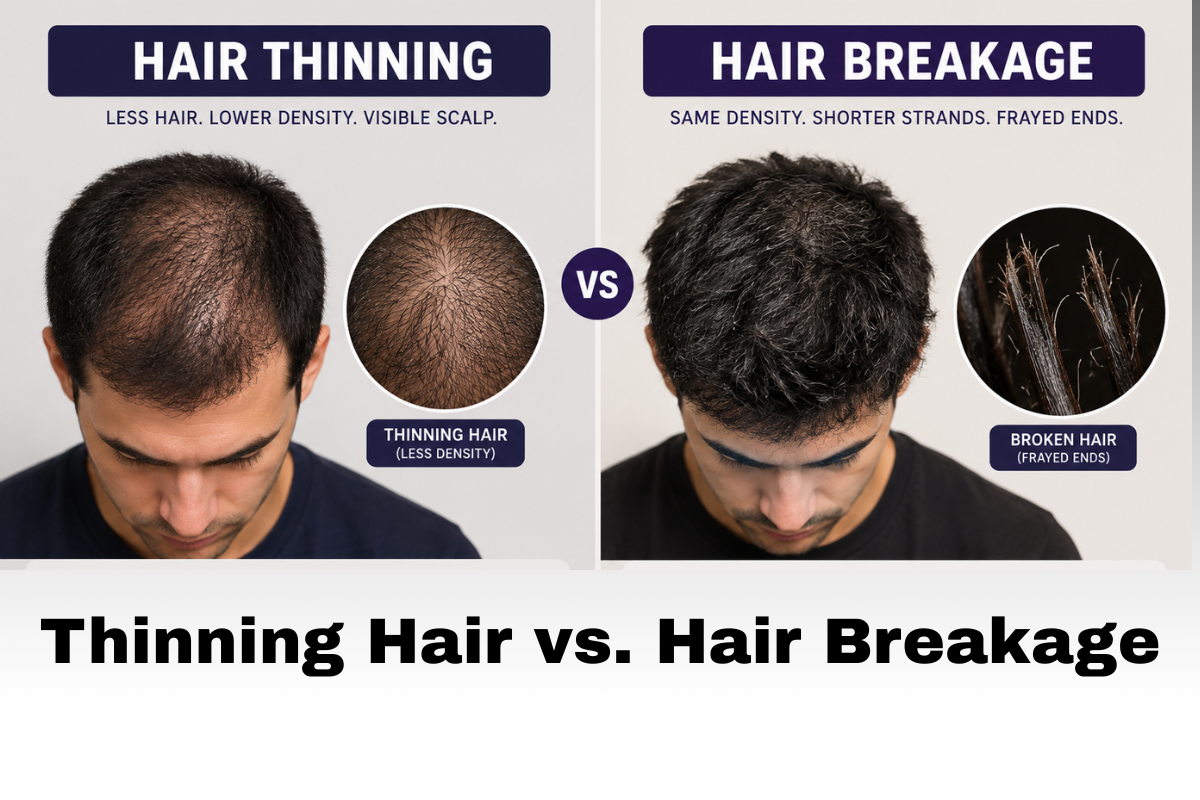
Noticing your hair looks different than it used to can be unsettling, but I think a lot of guys jump straight to “I’m going bald” without actually figuring out what’s going on first. Sometimes it’s genuine thinning. Sometimes it’s just breakage. And honestly, telling them apart matters, because the fixes are completely different.
How to know weather it is Thinning Hair vs. Hair Breakage let’s see
One thing I quickly learned is that these two get confused constantly, mostly because they can look similar at a glance less hair, a different texture, maybe some visible scalp. But they’re happening for very different reasons.
What’s Actually Different Between the Two
I think the first thing to understand is where the problem is actually happening.
- Thinning hair happens at the root it’s about fewer active hair follicles or follicles producing finer, shorter hairs over time
- Hair breakage happens along the hair shaft the strand itself snaps or splits somewhere between the root and the tip
- Thinning is usually tied to biology (genetics, hormones, shedding cycles); breakage is usually tied to physical or chemical stress on the hair
Signs That Point to Hair Breakage
If I were trying to figure out which one I was dealing with, I’d look for these first, since breakage is often the easier one to identify.
- Shorter, frizzy-looking strands sticking up, especially around the crown or wherever you style most
- Split ends or a rough, uneven texture
- Hair that seems to “break off” rather than fall out with a visible root
- A pattern that lines up with heat styling, coloring, tight hairstyles, or harsh brushing habits
- No real change in your hairline or scalp visibility the issue is texture and length, not density at the root
Signs That Point to Thinning Hair
On the other hand, these signs suggest something happening closer to the follicle itself.
- Gradual reduction in overall hair density, rather than damaged-looking strands
- More visible scalp, especially under bright light or when hair is wet
- Hair that feels finer overall, not just at the ends
- A pattern that tends to show up at the temples, crown, or across the whole scalp rather than just where you style
- Slower, more gradual change over months, rather than a sudden texture shift
Common Causes of Breakage
If breakage looks like the more likely explanation, a few usual suspects are worth considering:
- Frequent heat styling without any heat protection
- Chemical treatments coloring, bleaching, relaxers
- Aggressive brushing or towel-drying, especially on wet hair
- Tight hairstyles or headwear that create consistent friction or tension
- Harsh shampoos that strip moisture and leave hair more fragile
Common Causes of Thinning
If thinning looks more likely, the causes tend to be different:
- Genetics and hormonal factors, most commonly androgenetic alopecia (male pattern hair loss)
- Age-related changes in hair density
- Temporary increased shedding from stress, illness, or a major physical event
- Certain nutritional deficiencies, in some cases
- Underlying health conditions, less commonly
I go deeper into these specific causes in [What Causes Hair Loss in Men?].
A Simple Way to Check
If I were trying to sort this out myself, I’d do a few things:
- Look closely at a few “problem” strands do they look frayed, split, or uneven (breakage), or are they just visibly thinner and finer overall (thinning)?
- Think about your recent habits new heat tool, new hairstyle, new hair color anything that lines up with when you first noticed the change
- Check whether it’s isolated to one area (often breakage from styling) or spread more evenly (often thinning)
- Pay attention to whether it’s gotten worse gradually over months, which leans more toward thinning than a styling-related issue
Why Getting This Right Matters
I wouldn’t treat this as just a minor detail the distinction actually changes what you should do next.
- If it’s breakage, the fix usually involves adjusting your styling habits, easing up on heat and chemical treatments, and being gentler with wet hair
- If it’s thinning, that’s a different conversation, and one where a dermatologist can actually help you understand what’s driving it and what options exist
- Treating breakage like it’s thinning (or the reverse) means you’re solving the wrong problem, which wastes time either way
What I Wouldn’t Do
- I wouldn’t assume every “less hair” moment means pattern hair loss
- I wouldn’t ignore consistent, worsening thinning just because it’s not dramatic yet
- I wouldn’t try to self-diagnose permanently based on one bad hair day
About the author

Hi, I’m Sahil sheikh, the founder of BrightGlowHub.
I’m not a dermatologist I’m someone who got tired of guessing at skincare and hair care and decided to actually learn how it works. This site is where I break down the basics in plain language, grounded in reputable sources like the American Academy of Dermatology, so you don’t have to wade through jargon or guesswork to build a routine that fits you.
I cover both skin and hair because they’re more connected than most sites treat them your scalp is skin, after all. When I share general guidance, it’s based on research and expert sources. When I talk about a product I’ve actually used, I’ll say so directly, and I’ll always disclose affiliate links clearly.
Questions or spot something I got wrong? Reach me at sahilsallu11@gmail.com — I’d rather fix it than leave it.
— sahil sheikh , Founder
I have covered everything about hair thinning and hair loss in Men’s Hair Loss & Thinning: Causes, Signs, and Treatment Options
When to See a Dermatologist
I wouldn’t diagnose your specific case here, but if you’re seeing gradual, sustained thinning especially with visible scalp, a changing hairline, or a family history of hair loss that’s worth an actual evaluation rather than guessing. A dermatologist can look at your scalp directly and tell you far more accurately than a mirror can.
The Bottom Line
Hair breakage and hair thinning can look similar on the surface, but one is about damaged strands and the other is about what’s happening at the root. Taking a closer look at the pattern — where it’s happening, how it started, and how it’s changed over time usually points you toward the right explanation, and the right next step.
This article reflects general grooming tips and personal observations, not medical advice. Everyone’s hair and scalp are different, so what works for one person may not work the same way for you.