If I had to pick one single item that does the most work in a men’s casual wardrobe, it would be jeans. They go with almost everything, work across nearly every season, and hold up to daily wear better than most other casual pants. But “men’s jeans” is a much bigger category than it looks from the outside, and picking the wrong fit or wash is probably the most common wardrobe mistake I see guys make.
One thing I’d point out before going further is that there’s no single “best” pair of jeans for every guy. The right fit depends on your body type, what you’re pairing them with, and honestly, what you feel comfortable in. This guide walks through the main fits, washes, and fabric considerations, along with what to actually check before buying plus a section below where you can compare specific options.
This post contains affiliate links. If you purchase through them, I may earn a small commission at no extra cost to you. I only recommend products I believe are genuinely worth considering
Why Jeans Are the Backbone of a Casual Wardrobe
Jeans earn their place in a men’s casual wardrobe for a few practical reasons:
- They pair with nearly every shirt style — T-shirts, casual button-downs, flannels, overshirts
- Denim is durable enough to handle daily wear without showing damage quickly
- They work across most seasons, especially when paired with the right layers
- A well-fitted pair looks appropriate for a wide range of occasions, from errands to casual dates
Because they’re worn so often, getting the fit and fabric right matters more here than almost anywhere else in your wardrobe.
Jean Fits Explained
Straight-Leg Jeans
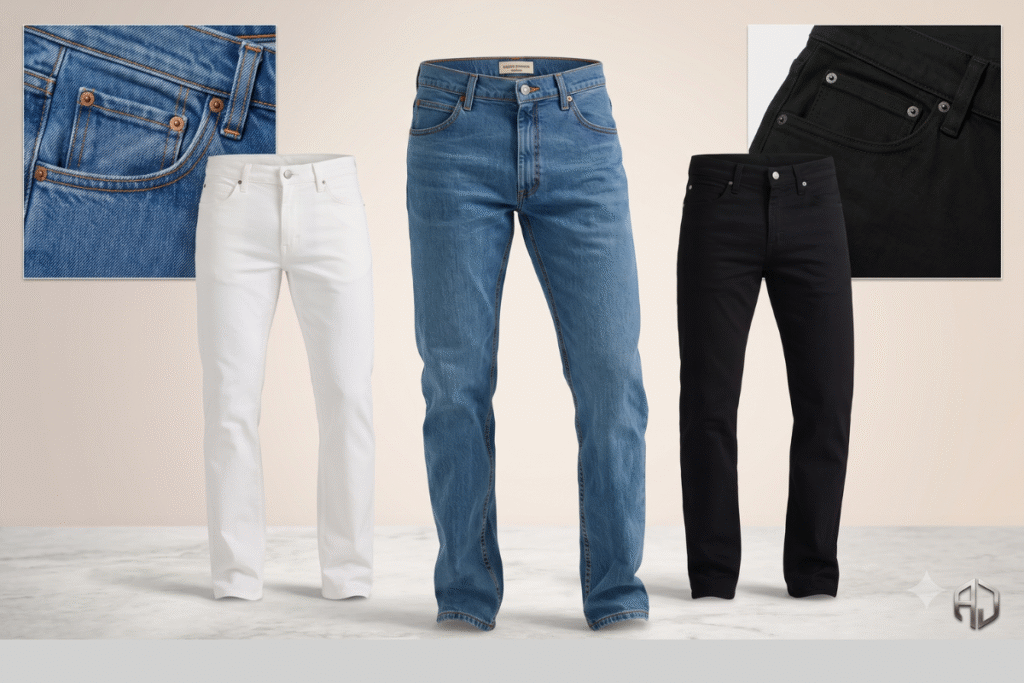
A classic, consistent width from thigh to ankle. This is often the safest starting point if you’re not sure what fit works best for your body type, since it avoids being too tight or too loose anywhere along the leg.
- Works well with most shoe styles, from sneakers to boots
- Flattering across a wide range of body types
- A reliable, versatile default if you’re building a jean collection from scratch
Slim Jeans
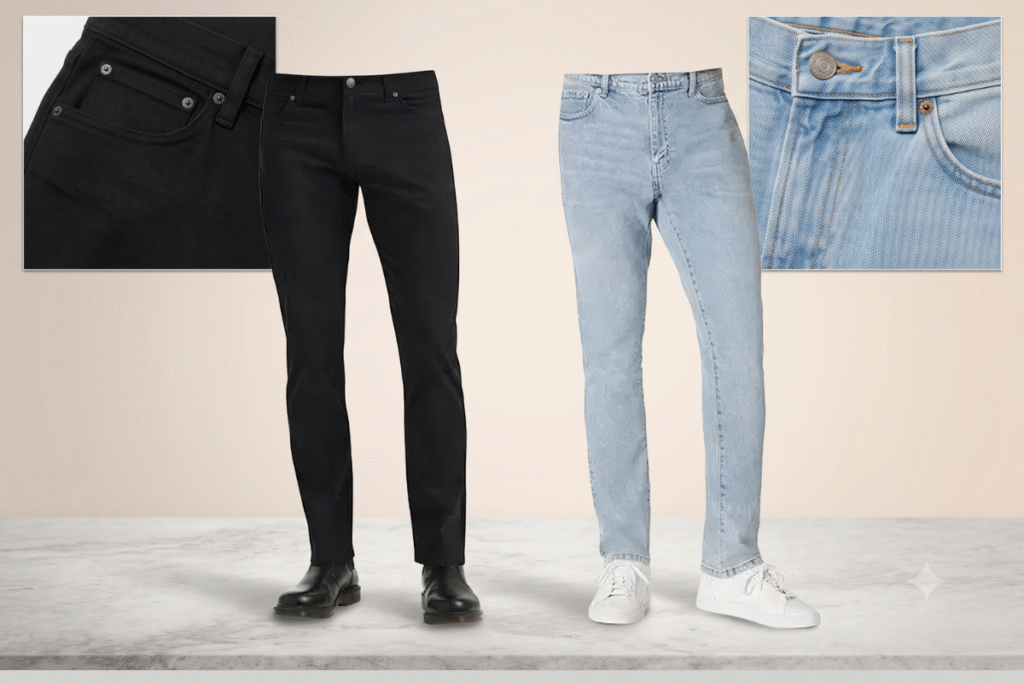
Closer to the leg without being restrictive. This has become a common modern default for a lot of guys.
- Creates a cleaner silhouette than straight-leg
- Pairs especially well with slimmer shoe styles like loafers or low-profile sneakers
- Worth trying on carefully, since “slim” varies significantly between brands
Relaxed-Fit Jeans
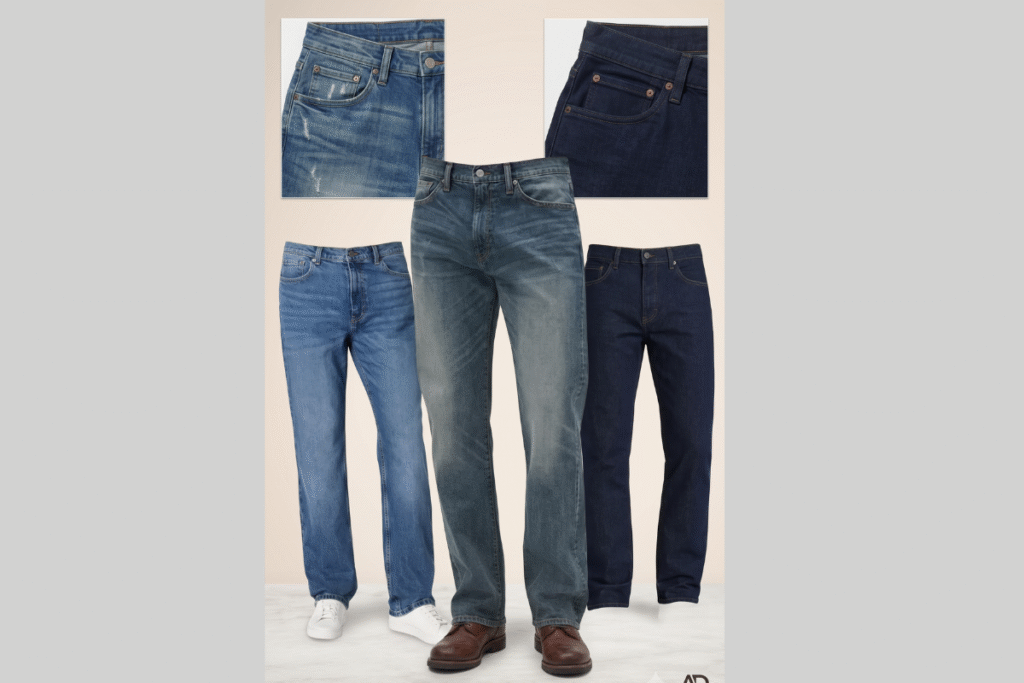
More room throughout the leg, prioritizing comfort over a fitted silhouette.
- A good choice for guys who prioritize comfort or prefer a more laid-back look
- Works well with boots and bulkier sneakers
- Can look sloppy if sized too large, so fit through the waist still matters
Tapered Jeans
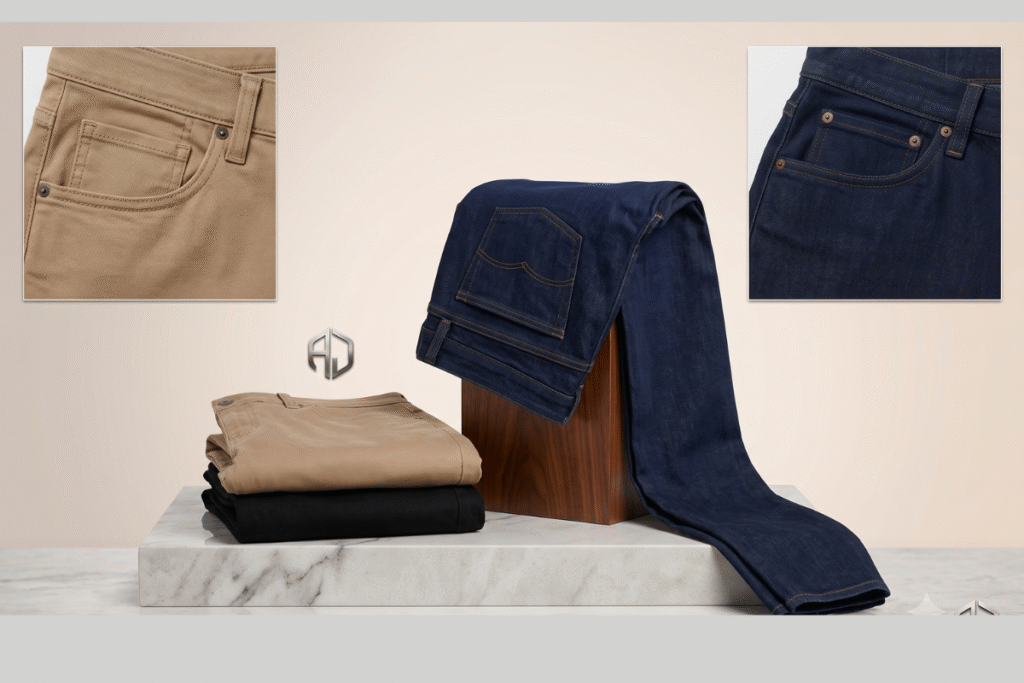
Fitted through the thigh, narrowing toward the ankle.
- A good middle ground between slim and straight
- Tends to pair well with both sneakers and boots
- Flattering for guys who want a more structured leg without a fully slim fit
Understanding Jean Washes
- Dark wash — the most versatile option, easy to dress up slightly, pairs well with almost any shirt color
- Medium wash — a classic, everyday option that works for nearly any casual setting
- Light wash — more casual and relaxed, tends to work best in warmer months or more laid-back settings
I wouldn’t treat these as strict rules. A dark wash generally reads as slightly more polished, while a light wash leans more relaxed, but plenty of guys build entire wardrobes around whichever wash they personally prefer.
How to Choose the Right Fit for Your Body
Fit is where most guys actually go wrong with jeans, more than wash or brand. A few things I’d think through:
- Body proportions — straight or tapered fits tend to be the most universally flattering starting points; slim fits work well for leaner builds; relaxed fits accommodate a wider range of comfort preferences
- Comfort — if a pair feels restrictive sitting down or walking, that’s worth paying attention to before committing to a purchase
- Occasion — slimmer, darker jeans tend to look more appropriate for casual dates or dinners; relaxed or straight fits work well for everyday errands and comfort-focused days
- Footwear — slimmer jeans pair naturally with low-profile shoes, while relaxed or straight fits give boots and chunkier sneakers more room to work with
- Personal style — ultimately, the fit that makes you feel most comfortable wearing it regularly is the one that’s actually going to get worn
Too Tight vs. Properly Fitted vs. Relaxed vs. Overly Baggy
I think it helps to think about fit as a spectrum rather than fixed categories:
- Too tight — restricts natural movement, tends to show visible strain at the seams, particularly around the thighs and seat
- Properly fitted — comfortable through the seat and thigh, with a clean break where the hem meets your shoe
- Relaxed — extra room throughout, without looking shapeless
- Overly baggy — excessive pooling at the ankle, often reads as unintentional rather than styled
None of these are inherently “wrong” as a personal style choice, but understanding where a pair falls on this spectrum helps you buy more intentionally instead of guessing.
Where to Shop for Men’s Jeans
There are a lot of options for buying men’s jeans in the U.S., ranging from higher-end denim brands to accessible, budget-friendly retailers. Old Navy men’s jeans are a common starting point for a lot of guys, largely because they’re widely available, come in a range of fits, and tend to be priced accessibly compared to specialty denim brands. As with any retailer, I’d recommend checking the specific fit notes, fabric composition, and current customer reviews for the exact style you’re considering, since fit and quality can vary across different jean lines even within the same brand.
Beyond Old Navy, you’ll find similar budget-friendly options at most major U.S. retailers, along with higher-end denim brands that typically offer more durable construction and better long-term fit retention, often at a higher price point. Neither end of that spectrum is automatically the “right” choice — it depends on your budget and how much you prioritize long-term durability versus upfront cost.
What to Check Before Buying Jeans
- Fabric composition — stretch denim (with a small percentage of elastane) tends to be more comfortable for everyday wear, while 100% cotton denim tends to hold its shape longer over time
- Rise — low, mid, or high rise affects both comfort and how the jeans sit relative to your waist
- Inseam length — too long results in excessive bunching or pooling; too short can look unintentionally cropped
- Return policy — especially important when buying jeans online, since fit varies so much by brand
- Reviews mentioning fit — phrases like “runs small,” “true to size,” or “fits long” are often more useful than the general star rating alone
- Durability — heavier denim weights generally last longer under regular wear
Common Mistakes When Buying Jeans
- Buying a fit based on what looks good on a model rather than your own proportions
- Choosing a size based on a single brand’s sizing without checking the specific fit notes for that style
- Ignoring inseam length, leading to excessive hemming or an awkward break at the shoe
- Owning multiple pairs in nearly identical fits and washes, instead of a range that covers different occasions
- Assuming a higher price automatically means better fit or quality without checking reviews or fabric details
How Jeans Fit Into a Broader Casual Wardrobe
Jeans work best as a foundation piece rather than the whole outfit. A couple of reliable combinations:
- Dark wash straight-leg jeans + casual button-down + sneakers — clean and versatile for most casual settings
- Medium wash tapered jeans + T-shirt + casual jacket — an easy everyday combination
- Relaxed-fit jeans + flannel shirt + boots — a comfortable, cold-weather option
Having two to three pairs in different fits or washes gives you considerably more outfit flexibility than owning five nearly identical pairs.
I have covered everything in detail about men’s casual fashion in : Men’s Casual Fashion Guide: Best Wardrobe Essentials for Men
The Bottom Line
Finding the right men’s jeans comes down to understanding your own fit preferences and body proportions more than chasing a specific brand or trend. Two or three well-fitted pairs in different fits or washes will almost always get more consistent wear than a closet full of jeans that technically fit but don’t actually feel comfortable or versatile enough to reach for regularly.