By sahil sheikh | Skin Care & Sun Protection
Table of Contents
For the longest time, I avoided sunscreen like it was the enemy. Not because I didn’t know I needed it I did but because every sunscreen I tried left my face looking like a glazed donut by noon. Greasy, shiny, heavy, and uncomfortable. As someone with oily skin, putting on sunscreen felt like punishment.
Then a friend recommended I try a Korean sunscreen. I was skeptical. I figured sunscreen was sunscreen how different could it really be?
Very different, as it turns out.
That one switch completely changed my relationship with sun protection. And if you have oily skin and have been skipping sunscreen for the same reasons I was, this blog is going to change things for you too.
My Skin Before Switching
- oily T-zone
- acne marks
- sunscreen issues
- greasy and uncomfortable by noon
Sunscreen Which I Have Tried Before
Before trying beauty of joseon sunscreen I have tried 3 sunscreens :
1.Dermatouch Sunscreen :
Pros :
Cons :
2.Fix Derma sunscreen :
Pros :
Cons :
3.Deconstruct gel sunscreen :
Pros :
Cons :
Why Korean Sunscreens Are So Different
Let me start by explaining why Korean sunscreens have built such a massive reputation especially among people with oily or combination skin.
Korean skincare brands put an enormous amount of focus on texture and feel, not just function. While most Western sunscreens are formulated to be effective, Korean sunscreens are formulated to be effective and enjoyable to wear. That distinction sounds small, but it makes all the difference when you have oily skin.
Many Korean sunscreens use newer-generation UV filters that are approved in South Korea and several other countries but are not yet approved by the U.S. FDA.
These filters provide excellent broad-spectrum protection while feeling incredibly lightweight on the skin almost like wearing nothing at all.
Many of them have a watery, gel-like, or milky texture that absorbs quickly, leaves zero white cast, and doesn’t interact with your skin’s natural oil production the way traditional sunscreens do.
For oily skin specifically, this is a revelation.
What Makes Korean Sunscreen Great for Oily Skin
When I first made the switch, I noticed a few things right away that made Korean sunscreens stand out from everything I had tried before.
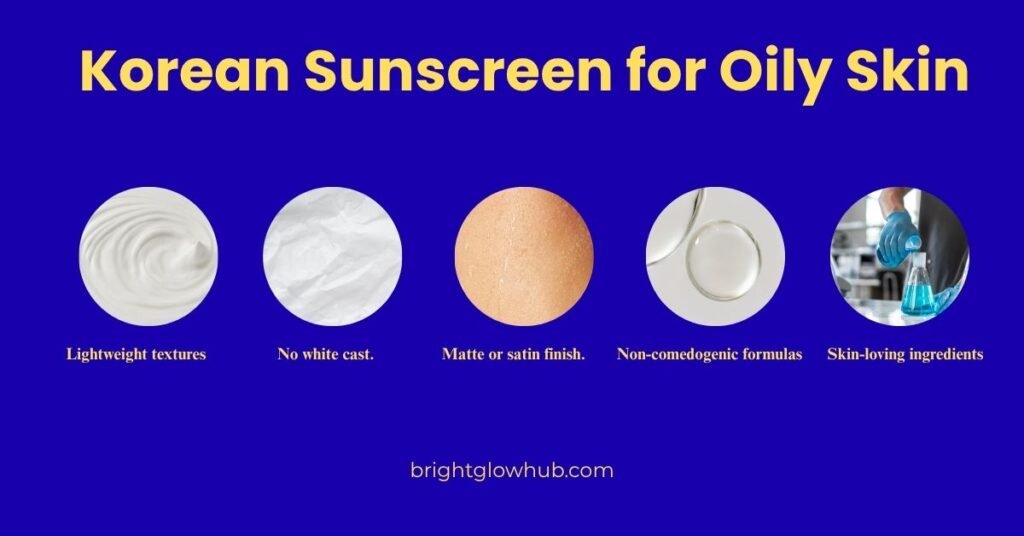
Lightweight textures that don’t feel like sunscreen. Most Korean sunscreens come in gel, fluid, or essence form. They spread easily, absorb fast, and don’t sit on top of your skin. For oily skin, this is everything because heavy sunscreens mix with sebum and create that awful greasy layer that drives us crazy.
No white cast. This was a huge one for me. Many sunscreens especially mineral ones leave a white or grayish tint on the skin. Korean sunscreens, particularly chemical or hybrid formulas, are designed to be completely transparent on all skin tones.
Matte or satin finish. A lot of Korean sunscreens for oily skin are specifically formulated to control shine throughout the day. Some even contain ingredients like silica or niacinamide that actively absorb excess sebum. Instead of making my face shinier, my sunscreen now actually helps keep it calmer and more matte.
Non-comedogenic formulas. Clogged pores and breakouts were always my biggest fear with sunscreen. Korean sunscreens tend to use lighter ingredients that don’t sit in your pores. After switching, my post-sunscreen breakouts disappeared almost entirely.
Skin-loving ingredients. Korean sunscreens don’t just stop at UV protection. Many of them include ingredients like hyaluronic acid, centella asiatica, niacinamide, and green tea extract all of which benefit oily skin by balancing, soothing, and hydrating without adding grease.
Before and after using Korean sunscreen
Key Ingredients to Look for in Korean Sunscreen for Oily Skin
Once I started paying attention to ingredients, I got much better at picking the right product. Here’s what I now specifically look for:
Niacinamide : This is one of my favorites. Niacinamide helps regulate sebum production, minimize the appearance of pores, and even out skin tone. Finding it in a sunscreen means I’m getting sun protection and oil control in one step.
Centella Asiatica (Cica) : If your oily skin is also sensitive or prone to redness, centella asiatica is a calming hero ingredient. It soothes inflammation and supports the skin barrier, which is often disrupted in oily, acne-prone skin.
Hyaluronic Acid : Oily skin still needs hydration. Dehydrated oily skin actually produces more oil to compensate for the lack of moisture. Hyaluronic acid provides lightweight hydration without any greasiness.
Silica : This ingredient absorbs excess oil and gives the skin a soft, matte finish throughout the day. A lot of Korean sunscreens formulated for oily skin include silica specifically for this reason.
Zinc Oxide (in hybrid formulas) : Some Korean sunscreens use a blend of chemical and mineral filters. Zinc oxide is naturally anti-inflammatory and can actually help calm acne-prone skin while providing broad-spectrum protection.
How I Use Korean Sunscreen in My Daily Routine
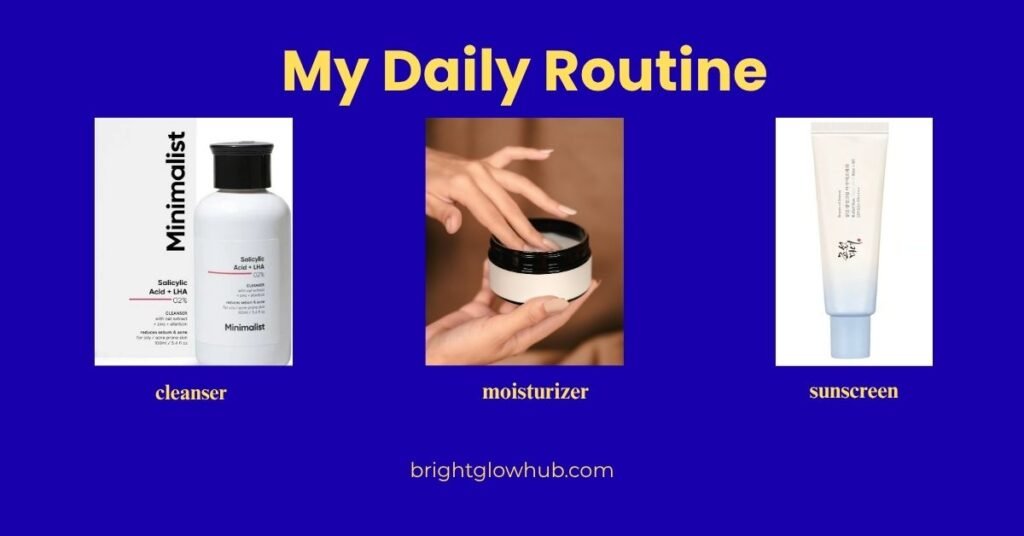
Switching to Korean sunscreen also helped me build a much simpler and more consistent routine. Here’s exactly what my morning looks like now:
Step 1 : Gentle Cleanser: I start with a mild, low-pH cleanser that removes overnight oil without stripping my skin. Clean skin is the best base for sunscreen to work properly.
Step 2 : Light Moisturizer (Optional): On days when my skin feels balanced, I skip the moisturizer entirely. On drier days, I use a lightweight gel moisturizer. The key is keeping this step minimal so my sunscreen doesn’t have to compete with heavy layers underneath.
Step 3 : Korean Sunscreen: This is the last step before I head out. I apply about a quarter teaspoon to my face and neck, blend it in with gentle patting motions, and let it absorb for about a minute. That’s it. No stickiness, no white cast, no shine. Just clean, protected skin.
That three-step routine replaced a much longer, more frustrating process and my skin has never looked better.
Best Korean Sunscreens for Different Budgets
Mistakes I Made When I First Started
I want to be honest here because I made a few rookie mistakes when I first got into Korean sunscreens, and I want to help you avoid them.
I didn’t apply enough. Korean sunscreens feel so light that it’s tempting to use just a tiny amount. But you still need about a quarter teaspoon for your face and neck to get the full SPF protection listed on the bottle. Using too little means you’re getting far less protection than you think.
I forgot to reapply. The lightweight feel fooled me into thinking my skin was still fully protected hours later. Sunscreen Korean or otherwise still needs to be reapplied every two hours if you’re spending time outdoors, or after sweating significantly.
I bought the wrong formula. Not every Korean sunscreen is ideal for oily skin. Some are rich and hydrating which is great for dry skin types but not for us. I always look for words like “matte,” “oil-control,” “lightweight,” or “for oily/combination skin” on the label before buying.
Why I’ll Never Go Back to Regular Sunscreen
Honestly, trying Korean sunscreen felt like finding out I’d been doing something wrong my entire life. The difference in texture, finish, and overall experience was so dramatic that I couldn’t believe I had been suffering through greasy, heavy sunscreens for years when there was a better option out there.
My skin is more consistent now. I actually look forward to applying sunscreen in the morning instead of dreading it. My pores look smaller,
my skin stays more matte throughout the day, and I’m genuinely protected from UV damage without any of the drawbacks that used to make me skip SPF altogether.
If you have oily skin and you’ve been avoiding sunscreen or tolerating one that you hate please try a Korean sunscreen formulated for oily skin. It might just be the thing that finally makes sun protection feel easy.
Frequently Asked Questions
Q1. Are Korean sunscreens safe for acne-prone skin
Yes, most Korean sunscreens designed for oily skin are non-comedogenic and actually include ingredients like niacinamide and zinc oxide that help calm acne-prone skin rather than aggravate it.
Q2. Do Korean sunscreens offer enough SPF protection?
If your Korean sunscreen contains hydrating ingredients like hyaluronic acid, you can often skip a separate moisturizer especially if you have oily skin. This simplifies your routine and reduces the chance of overloading your skin with layers.
Q3. Can I skip moisturizer if I use a Korean sunscreen?
If your Korean sunscreen contains hydrating ingredients like hyaluronic acid, you can often skip a separate moisturizer — especially if you have oily skin. This simplifies your routine and reduces the chance of overloading your skin with layers.
Q4. How is the PA++++ rating different from SPF?
SPF measures protection against UVB rays (which cause sunburn). The PA rating measures protection against UVA rays (which cause aging and deeper skin damage). More plus signs mean higher UVA protection. For daily use, look for at least PA+++ or PA++++.
Q5. Do Korean sunscreens leave a white cast on darker skin tones?
Most Korean chemical or hybrid sunscreens are formulated to be transparent on all skin tones with no white cast. If you’re concerned, look specifically for “no white cast” or “invisible finish” on the product description.
⚠️ Disclaimer: This article is for general informational purposes only and does not constitute medical or dermatological advice. Individual skin types vary. Please consult a dermatologist for personalized skincare recommendations.