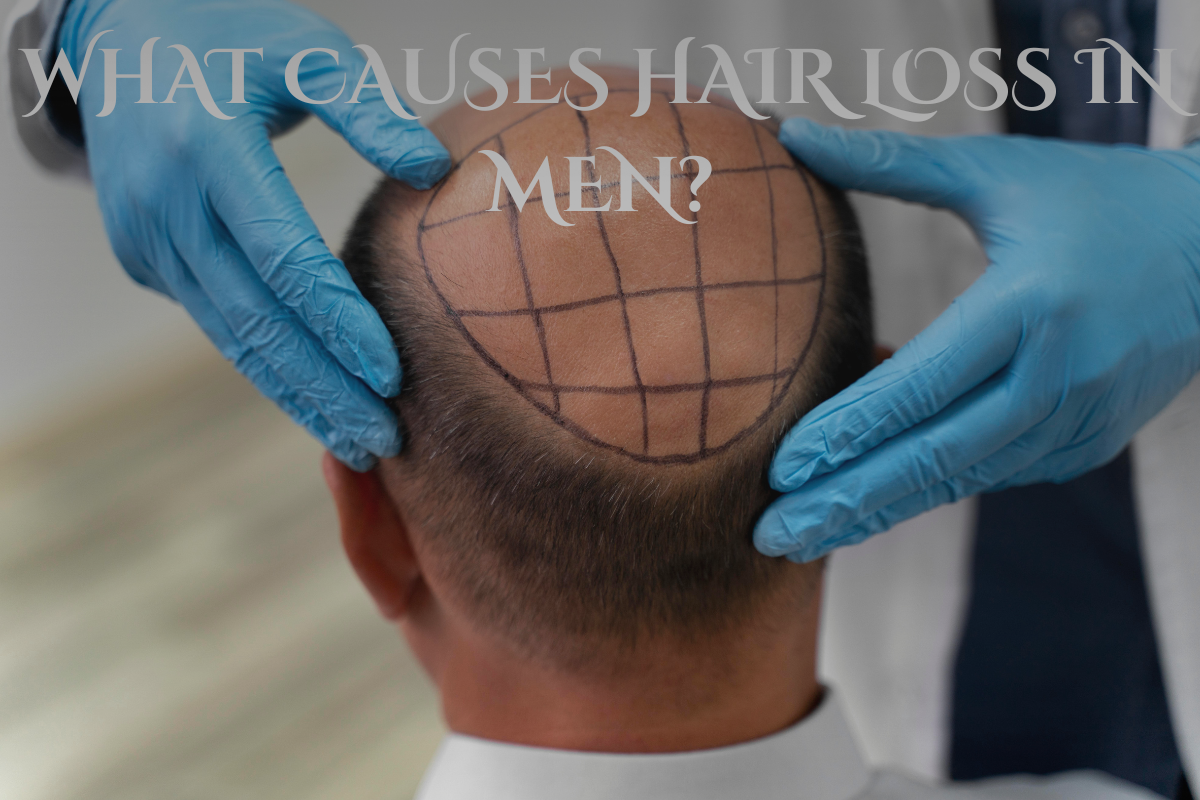
Once you start actually looking into hair loss, you realize pretty quickly that it’s not one single problem with one single cause. A lot of guys assume it’s always genetics, or always stress, or always “getting older” but the real picture is more layered than that, and understanding it actually helps you figure out what’s happening in your specific case.
Let’s see What are the factors and Causes of Hair Loss in Men?
One thing I found important when researching this topic is that several different factors can contribute to hair loss, sometimes on their own and sometimes stacked together. Let’s go through the most common ones.
Genetics: The Most Common Cause
If I were trying to understand what was happening, this is where I’d start, because it’s by far the most common explanation.
- The leading cause of hair loss in men is androgenetic alopecia, also known as male pattern hair loss
- It’s driven by genetic sensitivity to DHT (dihydrotestosterone), a hormone byproduct that can gradually shrink certain hair follicles over time
- This sensitivity can be inherited from either parent’s side of the family, not just your father’s, despite the common myth
- It typically follows a recognizable pattern — thinning at the temples and crown, a receding hairline — rather than an even, all-over loss
Age
This one seems obvious, but it’s worth actually understanding rather than just accepting.
- The likelihood of experiencing pattern hair loss generally increases with age
- That said, it can begin much earlier than people expect — some men notice early signs in their twenties
- Age alone doesn’t cause hair loss directly; it’s more that genetic and hormonal factors have simply had more time to take effect
Hormonal Factors that causes hair loss in men
I wouldn’t separate this entirely from genetics, since the two are closely connected.
- DHT sensitivity is the core hormonal driver behind male pattern hair loss
- Other hormonal shifts — from certain medical conditions, medications, or significant health changes — can also affect hair growth cycles
- This is part of why hair loss sometimes shows up alongside other symptoms, which is worth mentioning to a doctor rather than treating as unrelated
Stress
I wouldn’t oversimplify this one, because the relationship is more complicated than “stress causes baldness.”
- Significant physical or emotional stress can trigger a temporary condition called telogen effluvium, where more hairs than normal shift into the shedding phase at once
- This type of shedding typically becomes noticeable a few months after the stressful event, not immediately
- It’s mechanically different from androgenetic alopecia — one is a temporary shift in the hair cycle, the other is a genetic, hormone-driven process
- Telogen effluvium generally improves once the underlying stressor resolves, though this can take time
Nutritional Deficiencies
I’d be cautious here, since this is an area where a lot of overstated claims circulate online.
- Certain deficiencies — including insufficient iron, protein, or specific vitamins — have been associated with hair thinning or shedding in some people
- Correcting an actual, diagnosed deficiency may help related hair issues, but this isn’t the same as eating specific “hair growth foods” to fix hair loss in general
- Diet is far less likely to be the primary driver in cases of genetic pattern hair loss, which is hormonally driven rather than nutrition-driven
- If a deficiency is suspected, that’s something a doctor can test for directly, rather than something to guess at through supplements
i have covered about the Men’s Hair Loss & Thinning: Causes, Signs, and Treatment Options
in detail check it out
Illness and Major Physical Stress on the Body
This one surprises a lot of guys, because the timing can feel disconnected from the cause.
- Significant illness, high fever, surgery, or other major physical events can trigger a delayed, temporary increase in shedding
- This often becomes noticeable weeks or even a couple of months after the actual event
- Like stress-related shedding, this type is generally temporary and tends to resolve once the body recovers
Why It’s Rarely Just One Thing
What I found important when researching this is that these causes aren’t always separate from each other. It’s entirely possible to have an underlying genetic predisposition to pattern hair loss that becomes more noticeable during a stressful period, or a nutritional factor that compounds an existing hormonal one. That overlap is part of why self-diagnosing from a single cause can lead you toward the wrong fix.
What I Wouldn’t Assume
- I wouldn’t assume every case of hair loss has the same cause as a friend’s or family member’s
- I wouldn’t assume stress is “the” cause just because life has been hectic lately
- I wouldn’t assume a nutritional fix alone will resolve genetically driven hair loss
When to See a Dermatologist
I wouldn’t try to diagnose your specific situation, but a few signals are worth bringing to a professional rather than guessing indefinitely:
- Hair loss that’s sudden rather than gradual
- Patchy loss, rather than an even, pattern-based thinning
- Hair loss paired with other symptoms, like fatigue or unexplained weight changes
- Ongoing progression despite time and basic lifestyle adjustments
A dermatologist can evaluate your scalp, take a proper history, and in some cases run tests to identify whether you’re dealing with genetics, a temporary shedding condition, or something else entirely.
The Bottom Line
Hair loss in men rarely comes down to one isolated cause genetics, age, hormones, stress, nutrition, illness, medications, and underlying health conditions can all play a role, sometimes together. Understanding which of these actually applies to your situation is a much more useful starting point than guessing at a fix based on a single assumed cause.
This article is for general informational purposes only and isn’t a substitute for professional medical advice. Hair loss can have multiple causes, and only a qualified healthcare provider can evaluate your specific situation. If you’re experiencing persistent, sudden, or unusual hair loss, please consult a board-certified dermatologist. For more, see our full [Disclaimer].