When I think about men’s casual fashion, the first thing I’d tell you is that you probably don’t need half the clothes currently sitting in your closet. A lot of guys assume a better wardrobe means more clothes, when really it means the right clothes pieces that fit well, work with each other, and actually get worn instead of sitting untouched for months.
That’s really the idea behind this guide. Instead of chasing trends or filling your closet with one-off pieces, I want to walk through how to build a men’s casual wardrobe around versatile essentials items that can be mixed, matched, and reused across dozens of different outfits. Whether you’re starting from scratch or just trying to clean up a wardrobe full of things you never actually reach for, the goal is the same: fewer, better pieces that work harder for you.
What Is Men’s Casual Fashion?
Before getting into specific pieces, I think it’s worth clarifying what “casual” actually means, because it gets used pretty loosely.
- Casual — relaxed, comfortable clothing appropriate for everyday life: errands, hanging out, casual meals, weekend plans
- Smart casual — a step up, combining casual pieces with slightly more polished elements, often appropriate for casual dates or relaxed work environments
- Business casual — more structured, typically involving collared shirts, chinos or dress pants, and dress shoes
- Formal — suits, dress shirts, and the like, reserved for weddings, interviews, and formal events
One thing I’d point out is that casual doesn’t mean sloppy. A well-fitted T-shirt and clean sneakers can look more put-together than an expensive shirt that doesn’t fit right or looks wrinkled. Fit, cleanliness, and how well colors and pieces coordinate matter more than how much anything cost. That’s really the foundation of men’s casual style — it’s less about the individual price tag and more about how everything works together.
The Essentials of a Men’s Casual Wardrobe
If I were building a wardrobe from the ground up, these are the core categories I’d prioritize. Everything else builds outward from here.
| Wardrobe Essential | Why You Need It | What to Look For |
|---|---|---|
| T-shirts | The most-worn base layer in any casual wardrobe | Breathable fabric, true-to-size fit, durable stitching |
| Casual shirts | Versatile for layering or wearing on their own | Good fabric weight, comfortable collar, easy to dress up or down |
| Jeans | The most flexible pants in a casual wardrobe | Comfortable fit, quality denim, a wash that works with your other clothes |
| Other casual pants (chinos, joggers) | Options for slightly dressier or more relaxed occasions | Breathable fabric, appropriate fit through the leg |
| Casual shoes | Ties an outfit together more than people expect | Comfort, durability, versatility across outfits |
| Jackets | Adds warmth and visual structure to simple outfits | Season-appropriate fabric, fit through the shoulders |
| Sweaters/hoodies | Useful layering pieces for cooler weather | Comfortable fit, quality fabric that holds up to washing |
| Basic accessories | Small details that elevate a simple outfit | A belt that matches your shoes, a watch, minimal jewelry |
Each of these categories plays a specific role, and none of them needs to be overstuffed. A handful of well-chosen pieces in each category will get you further than a closet full of items you rarely reach for.
Best Casual Shirts for Men
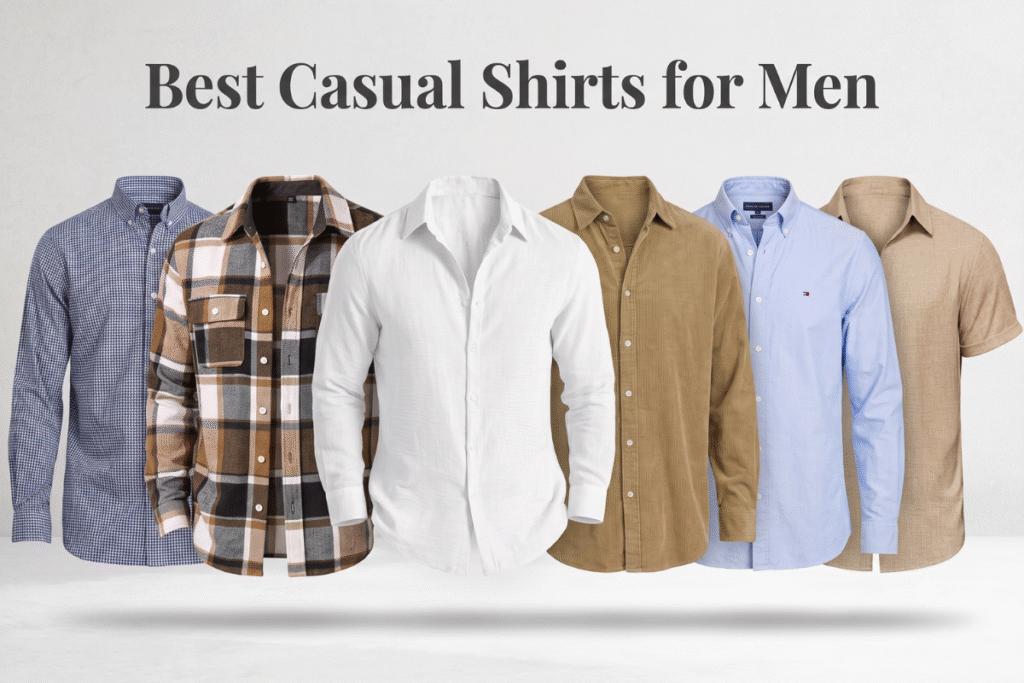
Casual shirts are probably the most versatile category in a men’s casual wardrobe, because they can be dressed up or down depending on what you pair them with.
A few common styles worth knowing:
- Oxford shirts — sturdy, slightly textured fabric that works well buttoned all the way up or layered over a T-shirt
- Casual button-downs — lighter weight than an Oxford, good for warmer weather or a slightly more relaxed look
- Linen shirts — breathable and ideal for hot, humid summers, though they wrinkle more easily
- Flannel shirts — warm, textured, great for layering in cooler months
- Overshirts — a shirt-jacket hybrid, worn open over a T-shirt as a light layer
- Short-sleeve casual shirts — a warm-weather staple that works well for casual outings
When I’m thinking about what makes a casual shirt genuinely versatile, a few things matter most:
- Fit — not too tight through the chest and shoulders, not so loose that it looks shapeless
- Fabric — breathable materials like cotton or linen tend to hold up well for everyday wear
- Color — solid neutrals are the easiest to build outfits around
- Pattern — subtle patterns (small checks, thin stripes) are more versatile than bold, busy ones
- Collar and sleeve length — should sit properly without bunching or gaping
A casual shirt pairs naturally with jeans and sneakers for an easy everyday look, or with chinos and boots for something slightly more put together. If you’re trying to figure out which specific shirts are worth prioritizing, I go into more detail in Best Casual Shirts for Men.
Men’s Jeans for Everyday Wear
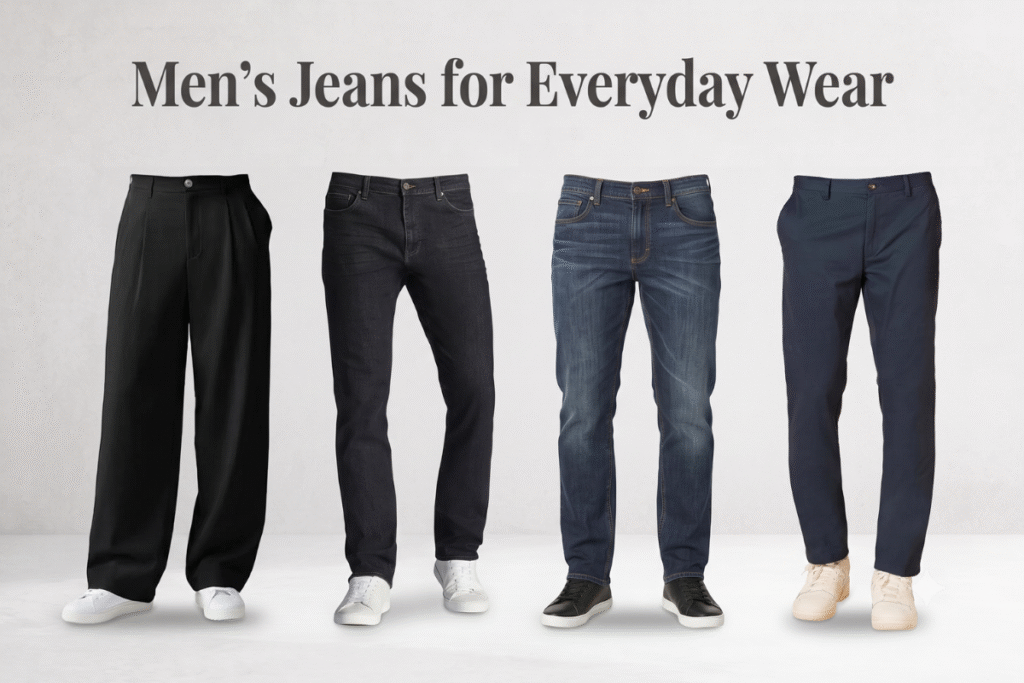
If I were only allowed to keep one category of pants, it would be jeans. They’re one of the most useful pieces in men’s casual fashion simply because of how many different outfits they can support.
Fit Styles to Know
- Straight-leg — a classic, consistent width from thigh to ankle, works for most body types
- Slim — closer to the leg without being tight, a common modern default
- Relaxed-fit — more room throughout, favored for comfort
- Tapered — fitted through the thigh, narrowing toward the ankle
Wash Options
- Dark wash — the most versatile and easiest to dress up
- Medium wash — a classic, everyday option
- Light wash — more casual, works well in warmer months
Choosing the Right Fit
I’d think about fit in terms of a simple spectrum:
- Too tight — restricts movement, tends to show wear and strain at the seams faster
- Properly fitted — comfortable through the seat and thigh, with a break at the shoe that looks intentional
- Relaxed — extra room without looking baggy
- Overly baggy — pools excessively at the ankle, tends to look unintentional rather than styled
Choosing jeans really comes down to body proportions, comfort, and how you plan to wear them. If you’re mostly pairing jeans with sneakers, a straight or slightly tapered fit tends to look clean. If you’re going for something a bit dressier with boots, a slim or tapered fit often works better.
For budget-friendly, widely available options, retailers like Old Navy men’s jeans are a common starting point for a lot of guys building out a casual wardrobe — they’re worth checking simply because they’re accessible and offer a range of fits. As with any retailer, I’d recommend checking the specific fit, fabric composition, and current reviews before buying, since inventory and quality can vary by style and season.
For a deeper breakdown of specific jean styles and how to shop for them, I cover that further in Best Men’s Jeans for Everyday Wear.
Best Casual Shoes for Men
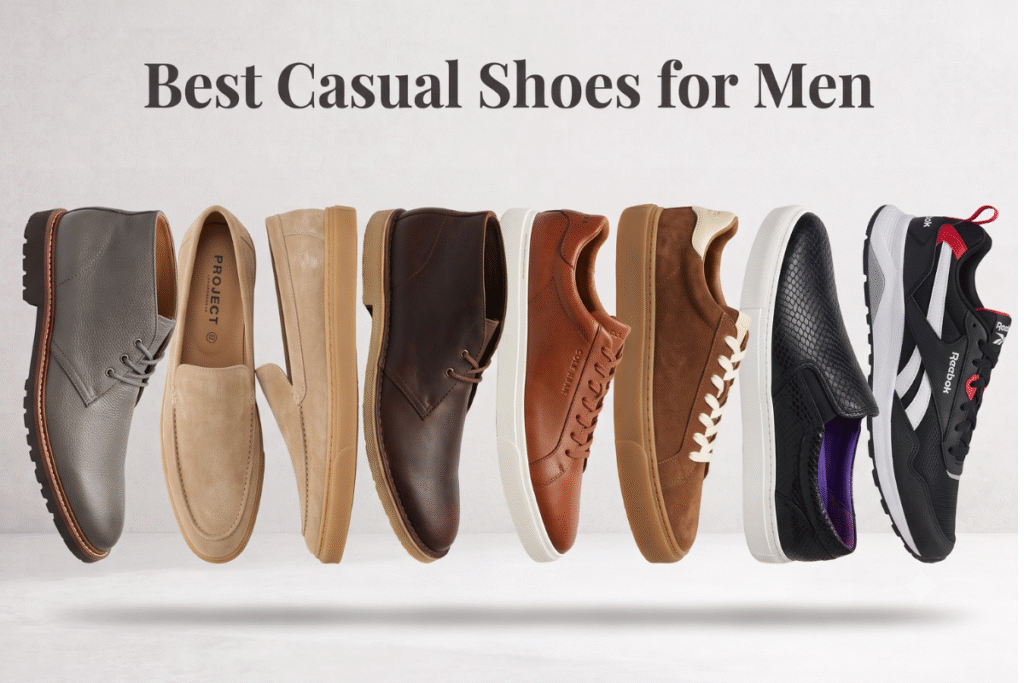
Footwear is one of those details that can change the entire feel of an outfit, even when everything else stays the same.
Common categories worth knowing:
- Sneakers — the most versatile casual shoe, works with jeans, chinos, and shorts alike
- Leather sneakers — slightly more polished than canvas, works well for smart casual looks
- Canvas sneakers — relaxed, casual, ideal for warm weather
- Loafers — a step toward smart casual, works well with chinos or dressier jeans
- Casual boots — adds a bit of ruggedness, pairs well with jeans and flannel or denim jackets
- Desert/chukka-style boots — versatile and low-profile, works across seasons
- Casual slip-ons — easy, low-effort option for errands or relaxed days
What I’d actually look for in men’s casual shoes:
- Comfort — if you’re not going to wear them because they’re uncomfortable, they’re not worth owning
- Fit — true-to-size, without pinching or excess space
- Versatility — does it work with multiple outfits, or just one specific look
- Materials — leather tends to last longer than synthetic materials but requires more care
- Durability — check sole construction and stitching quality
- Color — neutral tones (white, black, brown, tan) pair with the widest range of outfits
A pair of clean white or neutral sneakers is probably the single most versatile shoe in a casual wardrobe. If you want a deeper comparison of specific shoe types and how to choose between them, I go further into that in Best Casual Shoes for Men.
Casual Jackets for Men
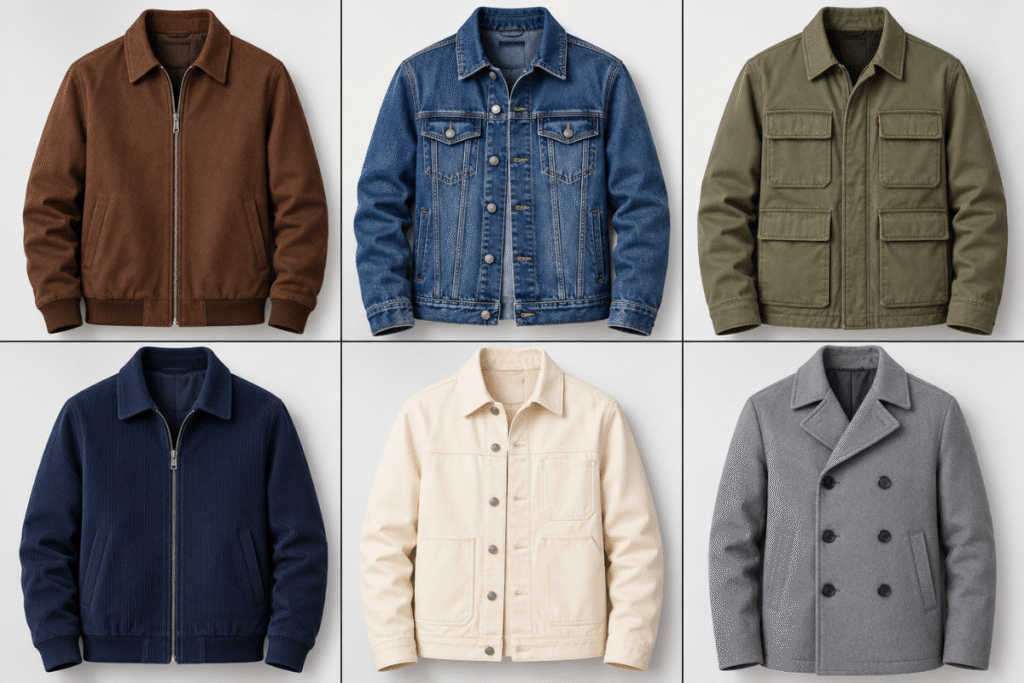
A jacket can take a simple T-shirt-and-jeans outfit and make it look considerably more intentional, which is part of why I think this category deserves more attention than it usually gets.
Common casual jacket styles:
- Denim jackets — a classic, versatile layer that pairs well with almost everything except other denim
- Bomber jackets — casual, slightly sporty, works well in cooler but not freezing weather
- Harrington-style jackets — lightweight, clean-lined, good for transitional weather
- Field jackets — more rugged, utility-inspired
- Lightweight utility jackets — practical, functional layers for mild weather
- Overshirts — as mentioned earlier, a lighter alternative to a full jacket
- Seasonal outerwear — heavier coats for genuinely cold climates
When choosing a jacket, I’d think through:
- Climate — what you actually need depends heavily on where you live; a guy in Minnesota has very different outerwear needs than a guy in Arizona
- Season — lightweight jackets for spring and fall, heavier options for winter
- Layering — does it fit comfortably over a T-shirt or sweater without feeling restrictive
- Fit — should sit properly through the shoulders without excess bulk
- Color — neutral tones remain the easiest to build outfits around
- Versatility — can it work with both jeans and chinos, or is it limited to one style
For more specific guidance on which jacket styles are worth prioritizing based on your climate and lifestyle, I expand on this in Best Men’s Jackets for Casual Outfits.
Best Men’s T-Shirts for Everyday Wear
T-shirts are probably the most-worn item in any casual wardrobe, which is exactly why I think they deserve more thought than most guys give them.
Common styles:
- Crew neck — the classic, most versatile neckline
- V-neck — slightly more casual, works well layered under an open shirt
- Heavyweight T-shirts — thicker fabric, holds shape well, tends to last longer
- Lightweight T-shirts — more breathable, better for warm weather
- Plain T-shirts — the most versatile option for building outfits
- Graphic T-shirts — adds personality, works best for casual, low-key occasions
- Relaxed-fit T-shirts — more room through the body, currently a common preference
- Fitted T-shirts — closer to the body, works well under layers
What I’d look for in t-shirts for men:
- Fabric — cotton or cotton blends tend to hold up well and stay comfortable
- Fit — shoulder seams should sit at your actual shoulder, not droop past it or pull tight
- Neckline — should hold its shape after multiple washes
- Length — long enough to stay tucked in if needed, without being excessive
- Sleeve length — should sit comfortably around the bicep without looking too tight or too loose
- Durability — thicker fabric weights generally last longer than very thin, cheap options
- Color — a mix of neutral basics with one or two statement colors gives you the most flexibility
A quick note on funny t-shirts for men: graphic or novelty tees absolutely have a place in a casual wardrobe, especially for relaxed hangouts, weekend errands, or low-key social gatherings. I wouldn’t build a whole wardrobe around them, and I definitely wouldn’t wear one to a casual date or a smart-casual setting, but as an occasional piece, they add personality without much downside.
How to Build a Men’s Casual Wardrobe From Scratch
If I were starting completely from zero, here’s roughly how I’d prioritize things, stage by stage:
Stage 1 — Basic T-shirts. Start with a handful of neutral, well-fitted T-shirts in colors like white, black, gray, and navy. These form the base of almost every outfit you’ll build.
Stage 2 — Jeans and casual pants. Add one or two pairs of well-fitted jeans, plus a pair of chinos if you want a slightly dressier option.
Stage 3 — Casual shirts. Introduce a couple of versatile button-downs or Oxford shirts that can be worn alone or layered.
Stage 4 — Casual shoes. Prioritize one genuinely versatile pair, usually a clean pair of sneakers, before branching into boots or loafers.
Stage 5 — Jackets and layers. Add outerwear appropriate to your climate, starting with something versatile like a denim or bomber jacket.
Stage 6 — Accessories. Round things out with a belt, a watch, and any other small details that add polish without much bulk.
This is just an example progression, not a strict formula — the exact order and quantity should reflect what you’ll actually wear based on your climate, lifestyle, and personal style.
How to Create Multiple Casual Outfits
One of the most useful things about a well-built men’s casual wardrobe is how many outfits a relatively small collection of pieces can produce. A few reliable combinations:
- T-shirt + jeans + sneakers — the default, works for almost any casual occasion
- Casual shirt + jeans + sneakers — slightly more polished, good for casual dates or coffee shops
- T-shirt + chinos + casual shoes — a step toward smart casual
- T-shirt + jeans + casual jacket + sneakers — adds structure, good for cooler weather or travel
- Oxford shirt + jeans + boots — leans smart casual, works well for casual restaurants or social gatherings
- Graphic T-shirt + jeans + casual jacket — relaxed but still put-together, good for weekend errands or hanging out with friends
These combinations work because each piece is neutral and versatile enough to pair with multiple others. That’s really the core idea behind building a wardrobe this way — you’re not buying one outfit at a time, you’re buying pieces that recombine into dozens of different looks.
How to Choose Colors for a Casual Wardrobe
Color coordination trips up a lot of guys, but it doesn’t have to be complicated. A handful of versatile colors go a long way:
- White
- Black
- Gray
- Navy
- Olive
- Beige
- Brown
- Denim blue
These neutrals are easy to combine because they don’t clash with much of anything. Once you have a base of neutral pieces, adding a patterned shirt or a brighter color becomes much lower risk, since it only needs to work with a few neutral basics rather than an entire closet of competing colors and patterns. This isn’t an absolute rule plenty of guys build great wardrobes around bolder color choices but starting with neutrals makes mixing and matching considerably easier, especially early on.
Fit Matters More Than Having More Clothes
If there’s one thing I’d want every guy to walk away from this guide understanding, it’s that fit matters more than quantity. A wardrobe full of clothes that don’t fit well will never look as good as a smaller wardrobe where everything actually fits.
A few fit details worth paying attention to:
- Shoulder seams on T-shirts and shirts should sit at your actual shoulder point
- Shirt length should be long enough to stay tucked if needed, without excess bunching
- Sleeve length should end at the wrist for shirts, mid-bicep for T-shirts
- Jean waist should sit comfortably without needing a belt to hold everything up, though a belt still finishes the look
- Jean break how the hem falls over your shoe affects how intentional an outfit looks
- Jacket fit should sit cleanly through the shoulders without pulling or excess fabric
- Shoe fit should allow natural movement without pinching or excessive space
Common fit mistakes I’d watch for: shirts and T-shirts that are too tight through the chest, jeans that bunch excessively at the ankle, and jackets that are either too tight to layer under or so oversized they lose their shape entirely.
Common Men’s Casual Fashion Mistakes
A few patterns I’d flag as things to avoid:
- Buying clothes without trying them on or checking fit carefully
- Owning too many nearly identical items instead of a range of versatile pieces
- Wearing shoes that don’t match the formality or style of the rest of the outfit
- Mixing too many competing patterns in a single outfit
- Ignoring proportions, like wearing baggy pants with an oversized top
- Wearing damaged, faded, or poorly maintained clothing regularly
- Buying trend pieces that don’t actually fit personal style or lifestyle
- Choosing clothing purely because it’s cheap, without considering durability
- Failing to consider whether a piece is versatile enough to pair with what you already own
About the author

Hi, I’m sahil sheikh , the founder of BrightGlowHub.com
I started this site because I got tired of guessing. Between confusing grooming advice, vague “best of” product lists, and conflicting style tips, it felt like there wasn’t one place that just explained things clearly for men who wanted to look and feel put together without overcomplicating it.
I’m not a dermatologist, and I’m not a professional stylist I’m someone who decided to actually research this stuff properly instead of winging it, and
BrightGlowHub is where I share what I’ve learned. The hair, skin, and scalp content here is grounded in research from reputable sources like the American Academy of Dermatology and Cleveland Clinic, not personal anecdotes dressed up as expert advice. The fashion and style content comes from practical research into fit, fabric, and what actually works across everyday American life, not personal product testing I haven’t done.
Here’s what you can expect from this site:
- Clear, honest grooming guidance no miracle claims, no guaranteed results
- Practical style advice focused on versatility and fit, not chasing trends
- Transparency about what’s research-based versus personal opinion
- Clear disclosure any time a post includes affiliate links
If you ever spot something that seems off, or just have a question, you can reach me at [contact email]. I’d rather fix a mistake than leave it standing.
— sahil sheikh, Founder, BrightGlowHub
How to Shop for Men’s Casual Clothes
Since a lot of casual shopping now happens online, it helps to have a clear framework for evaluating purchases before buying.
Things worth checking before you buy:
- Fit — check the brand’s specific sizing chart rather than assuming sizes are consistent across retailers
- Fabric — look at the material composition, not just the product photos
- Construction — stitching quality often tells you more about durability than the price tag
- Sizing — read fit notes (runs small, true to size, relaxed fit) when shopping online
- Return policy — especially important for online purchases where you can’t try things on first
- Versatility — consider how many existing pieces in your wardrobe a new item could realistically pair with
- Reviews — genuine customer reviews often reveal fit and quality issues that product photos don’t show
- Price — consider your actual budget rather than what looks impressive
- Cost per wear — a slightly more expensive piece you’ll wear constantly is often better value than a cheap piece you rarely reach for
- Brand reputation — established brands with consistent sizing tend to reduce guesswork over time
Whether you’re shopping in physical stores or online, this same framework applies. Physical stores let you check fit immediately, while online shopping often requires more attention to sizing details and return policies to avoid costly mistakes.
Frequently Asked Questions
What are the essentials of men’s casual fashion?
At a minimum: a handful of well-fitted T-shirts, one or two pairs of jeans, a couple of casual shirts, one versatile pair of shoes, and at least one jacket suited to your climate. From there, you can expand based on your lifestyle.
How many pairs of jeans should a man own?
There’s no universal number, but two to three well-fitted pairs in different washes (dark and medium, for example) usually covers most casual and smart-casual occasions.
What are the best casual shirts for men?
It depends on your climate and style, but versatile options like Oxford shirts, casual button-downs, and flannel shirts (for cooler months) tend to work across the widest range of outfits.
What shoes go best with men’s casual outfits?
Clean, neutral-colored sneakers are the most versatile option for everyday casual wear, working with jeans, chinos, and shorts alike.
How should casual jackets fit men?
A casual jacket should sit cleanly through the shoulders, allow room to layer a T-shirt or light sweater underneath, and not restrict natural arm movement.
What T-shirts should every man own?
A base of neutral crew-neck T-shirts in colors like white, black, gray, and navy, with room for one or two graphic or patterned options for variety.
How can men build a casual wardrobe on a budget?
Prioritize versatile, neutral basics first, buy fewer but better-quality pieces where possible, and focus on cost per wear rather than upfront price alone.
How can I make simple casual outfits look better?
Focus on fit first, keep colors coordinated with a neutral base, and pay attention to small details like clean shoes and a properly fitted jacket these tend to matter more than how expensive any single piece is.
Conclusion
Building a solid men’s casual wardrobe isn’t about accumulating more clothes — it’s about choosing pieces that fit well, hold up over time, and work together across a wide range of outfits. A handful of versatile T-shirts, a couple of well-fitted pairs of jeans, a few casual shirts, reliable shoes, and one or two jackets can realistically cover most of what everyday American life calls for, from weekend errands to casual dates to relaxed work environments.
The real takeaway here is to prioritize fit and versatility over quantity or trend-chasing. Before buying anything new, it’s worth asking whether it will actually pair with what you already own, and whether you’ll genuinely reach for it. A smaller, well-chosen men’s casual fashion wardrobe will almost always outperform a closet full of pieces that never quite get worn.