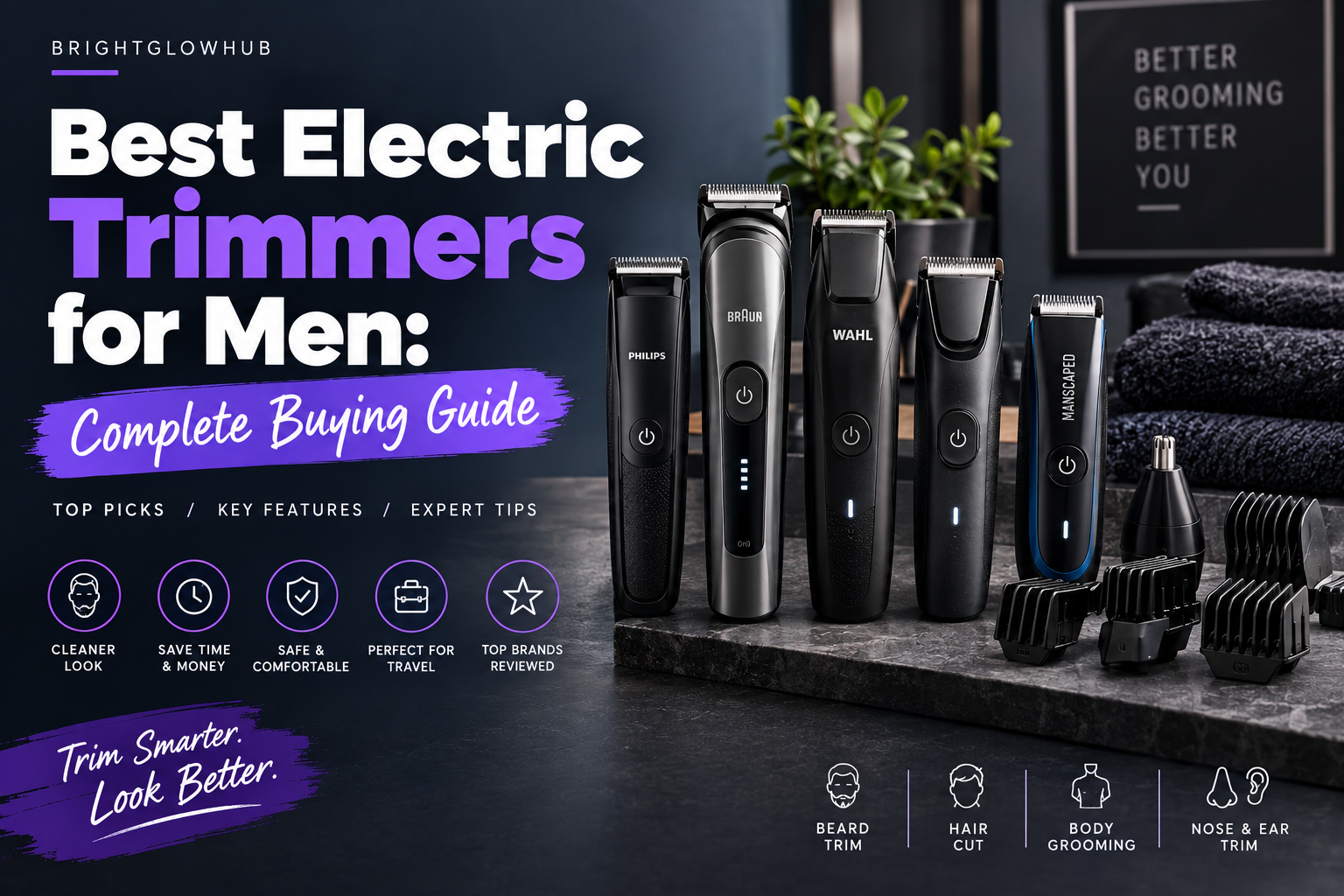
A good electric trimmer can genuinely make grooming easier and more consistent, whether you’re maintaining stubble, shaping a full beard, or keeping your hairline clean between haircuts. But trimmers for men aren’t one-size-fits-all, and the right choice depends heavily on your beard length, hair, body grooming habits, how often you’ll use it, how much precision you want, whether portability matters, and your budget.
This guide walks through the main types of trimmers, the features actually worth paying attention to, how to choose based on your specific grooming needs, and the common mistakes worth avoiding before you spend money.
This post contains affiliate links. If you purchase through them, I may earn a small commission at no extra cost to you. I only recommend products I believe are genuinely worth considering
What Is an Electric Trimmer?
An electric trimmer is a handheld tool designed to cut hair to a consistent, adjustable length using a motorized blade. Unlike a razor, which removes hair close to the skin for a clean shave, a trimmer is built to leave hair at a controlled length rather than remove it entirely.
Trimmers also differ from full hair clippers, which are generally built for cutting larger sections of hair during a full haircut. A trimmer tends to be more compact and precise, better suited to detail work like beard shaping, necklines, and edges, while clippers handle broader cutting.
Adjustable guards are what make a trimmer versatile. Instead of owning multiple tools for different lengths, a guard system lets one trimmer handle everything from close stubble to a longer, fuller beard.
Types of Trimmers for Men
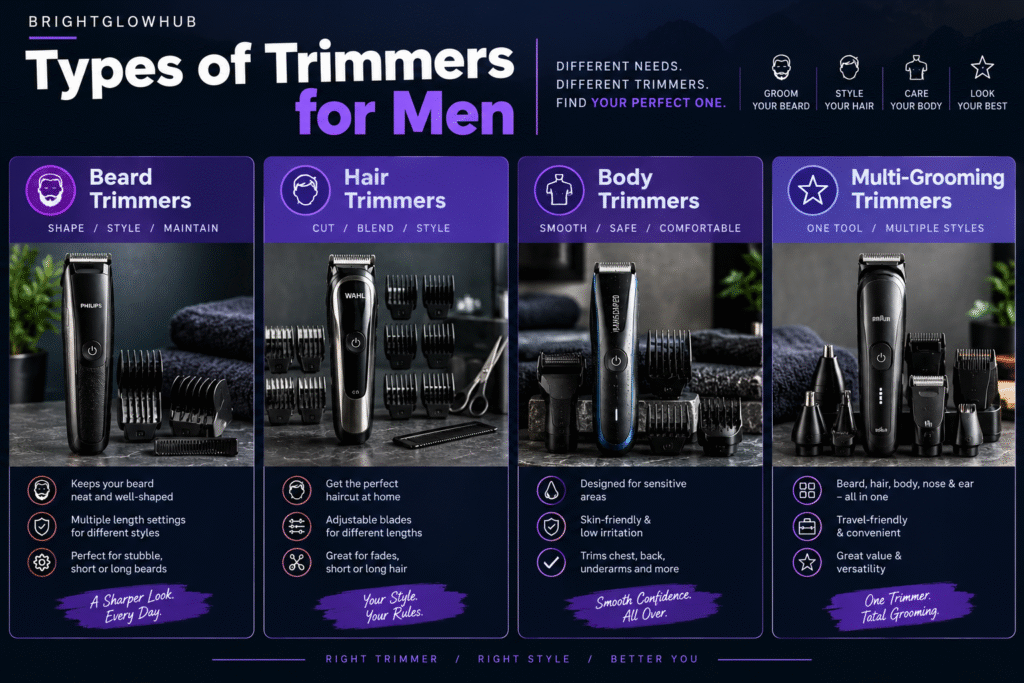
Beard Trimmers
Beard trimmers are built specifically for facial hair maintenance, covering everything from stubble to medium or longer beards, plus neckline cleanup and sideburn shaping. Beard length genuinely affects what kind of guard system you want — a guy maintaining stubble needs fine, close settings, while a guy with a longer beard needs a trimmer with enough power and guard range to handle thicker growth evenly.
Hair Trimmers
A hair trimmer is generally more useful for short hairstyles, hairline maintenance, and precision work around the edges rather than full haircuts. If you’re looking to do complete at-home haircuts, dedicated hair clippers are usually a better fit than a smaller facial trimmer, since clippers are built with wider cutting heads and more power for larger sections.
Body Trimmers
Body trimmers are designed for areas like the chest, stomach, and underarms, with skin-friendly blade guards built to reduce irritation on sensitive skin. A trimmer intended for body use should have rounded, protective guard tips rather than the sharper edges found on some facial trimmers.
Multi-Grooming Trimmers
A multi-grooming trimmer combines several functions into one device, typically through interchangeable heads or attachments covering beard trimming, body grooming, and detail work. This type makes sense for men who want one versatile tool rather than separate devices for each grooming task, though it can mean trading some precision for broader coverage.
Best Features to Look for in Trimmers for Men
Adjustable Length Settings
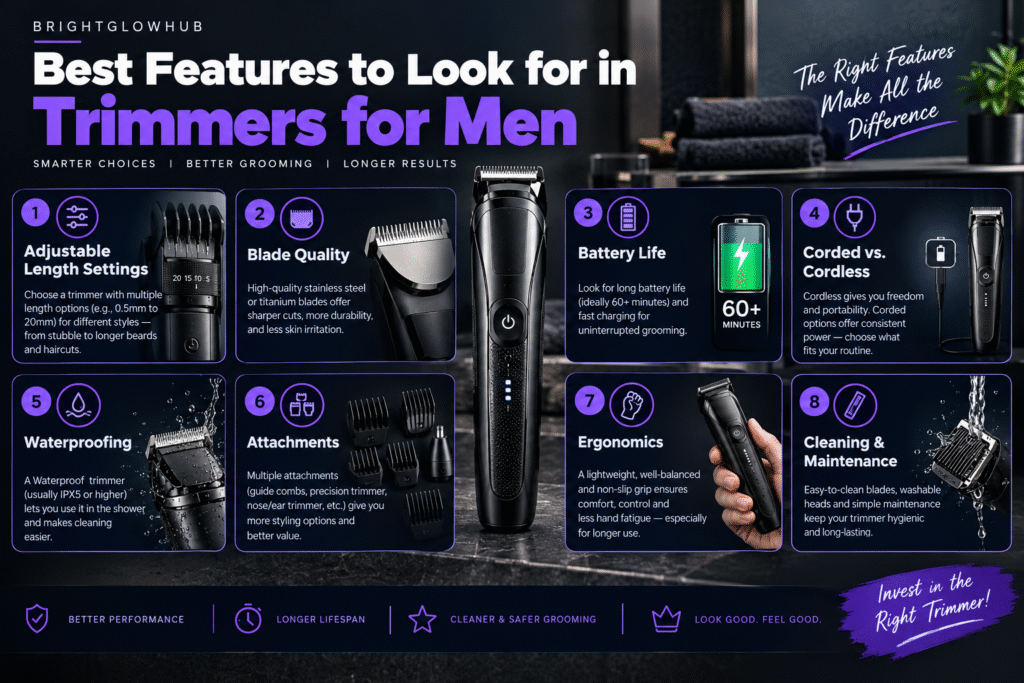
More guard lengths give you more control, letting one trimmer handle multiple styles rather than requiring separate tools for different lengths.
Blade Quality
Sharper, well-maintained blades cut more evenly and tend to be more comfortable on skin. Durability and how easily the blades can be cleaned and maintained matter more long-term than any single material claim.
Battery Life
For cordless trimmers, battery runtime and charging time affect how convenient the tool is day to day. A visible battery indicator helps avoid getting caught mid-trim with a dead battery.
Corded vs. Cordless
Cordless offers more flexibility and portability; corded offers consistent power without worrying about charge level, covered in more detail below.
Waterproofing
It’s worth understanding the difference between water-resistant (can handle light moisture or splashes), washable (can be rinsed under running water), and fully waterproof (can be used in the shower or submerged for cleaning). These aren’t interchangeable terms, and I wouldn’t assume a trimmer is submersible unless that’s explicitly stated for the specific model.
Attachments
Beard guards, body guards, detail trimmers, and sometimes nose or ear attachments add versatility, but only if you’ll actually use them. More attachments isn’t automatically better if half of them sit unused.
Ergonomics
A trimmer that’s comfortable and well-balanced in hand leads to more even results, especially in harder-to-reach areas like the jawline or neck.
Cleaning & Maintenance
Regularly cleaning blades and removing hair buildup keeps a trimmer cutting evenly and extends its lifespan. Some trimmers recommend occasional blade lubrication, and most eventually need replacement blades or guards as components wear down.
How to Choose the Best Beard Trimmer
For stubble — I’d prioritize precision and shorter length settings, since maintaining stubble requires finer control than a longer beard does.
For short beards — Adjustable guards that allow easy, even shaping across the whole beard matter most here.
For medium to long beards — Look for longer guard lengths and enough power to cut through thicker growth consistently without bogging down or pulling hair.
For beard shaping — Detail attachments and a precise trimmer head help with cleaning up edges, necklines, and sharper lines.
What I’d first consider when shopping for the best beard trimmer is simply matching the guard range to your actual beard length and style, rather than assuming a more expensive model automatically performs better for your specific use case.
How to Choose the Best Hair Trimmer for Men
For a hair trimmer specifically, I’d weigh hair length and cutting range, the quality and number of guards included, blade sharpness, battery performance, how comfortable the tool feels in hand, and how easy it is to clean after use. If you’re aiming for full at-home haircuts rather than touch-ups and edge work, a dedicated set of hair clippers is generally a better investment than relying on a smaller trimmer built primarily for facial hair.
Trimmer vs. Razor: Which Should You Choose?
| Trimmer | Razor |
|---|---|
| Leaves adjustable hair length | Can provide a closer shave |
| Useful for beard maintenance | Useful for clean-shaven looks |
| Good for shaping | Better for removing hair close to skin |
| Usually easier for maintaining stubble | Requires more attention to shaving technique |
In my view, this isn’t really an either/or decision for most guys. Plenty of men use a trimmer for regular beard maintenance and a razor for neckline or cheek line cleanup, or for days they want a fully clean-shaven look.
Cordless vs. Corded Trimmers
Cordless
Pros: portability, convenience, travel-friendly, no cable getting in the way while trimming
Cons: requires regular charging, battery performance degrades somewhat over time
Corded
Pros: continuous power with no charging required, no risk of running out of battery mid-trim
Cons: less portable, the cable itself can be inconvenient depending on your bathroom setup
I wouldn’t say one is objectively better it depends on whether portability or uninterrupted power matters more for your situation.
Best Trimmers for Travel
If I were buying specifically for travel, I’d prioritize a compact size, cordless operation, a travel lock to prevent accidental power-on in your bag, consideration of charging compatibility if you’re traveling internationally, a protective case, and easy cleaning on the go. If you’re flying, it’s worth checking current airline rules regarding batteries and electronic devices before packing, since these policies can vary and change.
How Much Should You Spend on a Men’s Trimmer?
Trimmers generally span budget, mid-range, and premium tiers, and I wouldn’t assume the most expensive option is automatically the best choice. What’s worth evaluating against price: build quality, battery performance, versatility across your actual grooming needs, included attachments, availability of replacement parts, warranty coverage, and expected lifespan with regular use. A mid-range trimmer with solid build quality and the right guard range for your needs often outperforms a premium model loaded with features you won’t use.
Common Mistakes When Buying Trimmers
- Buying based only on price, without considering build quality or longevity
- Ignoring guard length range relative to your actual beard or hair length
- Overlooking battery life, especially for cordless models used daily
- Buying too many unnecessary attachments that end up unused
- Ignoring cleaning requirements, which shortens a trimmer’s effective lifespan
- Choosing a beard-only trimmer when you actually need full hair-cutting capability
- Ignoring whether replacement blades or parts are available and affordably priced
- Assuming “waterproof” automatically means fully submersible without checking the specific product
- Choosing a trimmer without clearly identifying your intended use first
I have in detail about the Men’s Grooming Essentials Checklist: Best Grooming Products & Essentials check out for better grooming habits
Frequently Asked Questions
How often should I clean my electric trimmer?
Ideally after every use, removing hair buildup from the blades to maintain cutting performance and extend the trimmer’s lifespan.
Can one trimmer be used for hair, beard, and body grooming?
Yes, multi-grooming trimmers are designed for this with interchangeable heads or attachments, though dedicated tools sometimes offer more precision for a specific area.
What should I look for in a beard trimmer?
Adjustable guard range matching your beard length, blade quality, battery performance if cordless, and ergonomics that make it comfortable to use regularly.
Are electric trimmers better than razors?
Neither is universally better trimmers leave adjustable length and are easier for maintaining beards or stubble, while razors provide a closer, clean-shaven result. Many men use both for different purposes..
What is the difference between a beard trimmer and a hair trimmer?
A beard trimmer is built for facial hair precision and shaping, while a hair trimmer is generally better suited to short hairstyles, hairline maintenance, and edge work rather than full haircuts.
What is the best trimmer for men?
It depends on your specific needs beard length, hair style, and whether you want body grooming coverage all affect which trimmer type and features matter most for you.
Conclusion
Choosing the right trimmer really comes down to your actual grooming needs rather than simply buying the most expensive model on the shelf. Beard length, hair style, body grooming habits, battery preferences, guard range, and how much you’ll rely on included attachments should all factor into the decision before budget does. A well-matched, properly maintained trimmer will consistently outperform a pricier one that doesn’t actually fit your routine — and when it comes to trimmers for men, fit matters more than features you’ll never use.