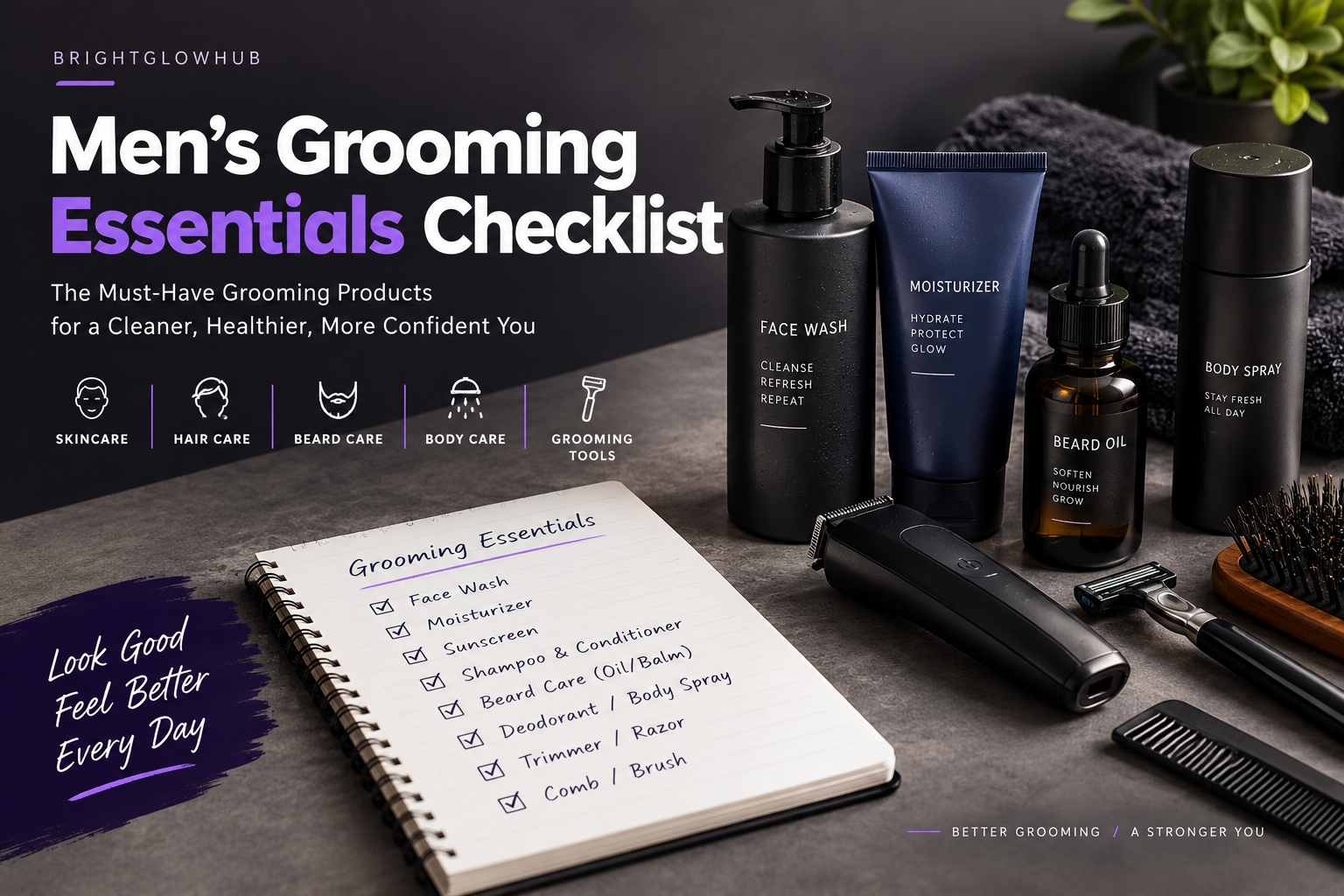
When I think about Men’s Grooming Essentials Checklist , I don’t think about a bathroom counter crowded with a dozen bottles. I think about a handful of products and tools that actually get used, consistently, because they solve a real need. A lot of guys either do too little one bar of soap and a razor, nothing else or get talked into too much, buying products they saw advertised without ever figuring out if they actually need them.
The right grooming kit really depends on a few individual factors: your facial hair, your hairstyle, your skin type, how much (if any) body grooming you do, your general lifestyle, and your budget. A guy with a full beard and oily skin needs a different lineup than a clean-shaven guy with dry skin and a short haircut. So instead of handing you a generic list and calling it done, I want to walk through how to actually figure out what belongs in your routine, what’s worth prioritizing, and what you can skip without missing much.
This post contains affiliate links. If you purchase through them, I may earn a small commission at no extra cost to you. I only recommend products I believe are genuinely worth considering
This guide covers what counts as a true grooming essential, a full practical checklist organized by category, how to build a kit from scratch, simple morning and evening routines, and what to actually evaluate before buying anything plus pointers to more detailed guides as you go.
What Are Men’s Grooming Essentials Checklist?
I think the first distinction worth making is between things that are genuinely essential, things that are useful depending on your specific routine, and things that are purely optional.
Daily Essentials
These are the products most men can reasonably use on a regular basis, regardless of hairstyle or facial hair preference:
- Face cleanser
- Moisturizer
- Sunscreen
- Deodorant
- Basic hair-care products (shampoo, at minimum)
Regular Grooming Tools
These aren’t used every single day, but most men reach for them regularly enough that they’re worth owning:
- Electric trimmer
- Razor
- Nail clippers
- Comb
- Scissors
Optional Grooming Products
These depend heavily on personal preference, facial hair, and lifestyle:
- Beard oil
- Beard balm
- Styling products
- Body scrub
- Fragrance
I wouldn’t assume every man needs every item on this list. A clean-shaven guy has no use for beard oil. A guy with very short hair doesn’t need much in the way of styling product. The goal is matching the list to your actual routine, not checking every box.
The Complete Men’s Grooming Checklist
Here’s a more detailed breakdown by category, so you can see what typically falls under men’s grooming essentials and how often each item tends to get used.
Face & Skincare
- Cleanser
- Moisturizer
- Sunscreen
- Lip care
- Targeted skincare (acne treatment, eye cream, etc.) where relevant
Hair
- Shampoo
- Conditioner
- Styling product
- Comb/brush
Beard & Shaving
- Razor
- Electric trimmer
- Shaving cream/gel
- Beard oil
- Beard balm
- Beard comb/brush
Body
- Body wash
- Deodorant/antiperspirant
- Body lotion
- Body grooming tool
Nails
- Nail clippers
- Nail file
- Small grooming scissors, where relevant
| Grooming Category | Essential Product/Tool | Why You Need It | How Often You May Use It |
|---|---|---|---|
| Face & Skincare | Cleanser | Removes dirt, oil, and sweat buildup | Daily, typically morning and night |
| Face & Skincare | Moisturizer | Maintains skin barrier and hydration | Daily |
| Face & Skincare | Sunscreen | Reduces sun damage and skin cancer risk | Daily, especially on exposed skin |
| Hair | Shampoo | Cleans scalp and hair | Varies by hair/scalp type, often every other day |
| Beard & Shaving | Razor or trimmer | Maintains facial hair length/shape | Varies by style, typically every few days |
| Body | Deodorant/antiperspirant | Manages odor and sweat | Daily |
| Nails | Nail clippers | Basic hygiene and maintenance | Weekly or as needed |
Not every item here is mandatory for every man this is meant as a reference checklist, not a required shopping list.
Best Grooming Kits for Men
If you’re starting from nothing, buying a pre-assembled grooming kit can be a reasonable shortcut, as long as you go in with the right expectations.
A grooming kit makes the most sense when:
- You’re building a routine from scratch and want a reasonable starting point without researching every product individually
- You need a travel-friendly bundle rather than individual full-size products
- You want to try a few products from one brand before committing to full-size versions
When evaluating a kit, I’d look at:
- Number of useful items — more pieces isn’t automatically better if half of them don’t fit your actual routine
- Product quality — ingredient quality and formulation matter more than the number of items included
- Tool quality — a cheap included razor or trimmer can undercut an otherwise decent kit
- Versatility — does the kit work for your skin type, hair type, and facial hair, or is it generic
- Portability — useful if you travel often, less important if everything stays on your bathroom counter
- Brand reputation — an established brand with consistent reviews reduces guesswork
- Replacement costs — check whether refills or replacement products are reasonably priced and easy to find
- Whether it contains products you actually need — a kit padded with items you’ll never use isn’t good value, regardless of the bundled price
The difference between a genuinely useful kit and a wasteful one usually comes down to whether the included items match your actual grooming habits, not how many products are crammed into the box. I go through specific kit comparisons and recommendations in [Best Grooming Kits for Men].
Best Men’s Grooming Products
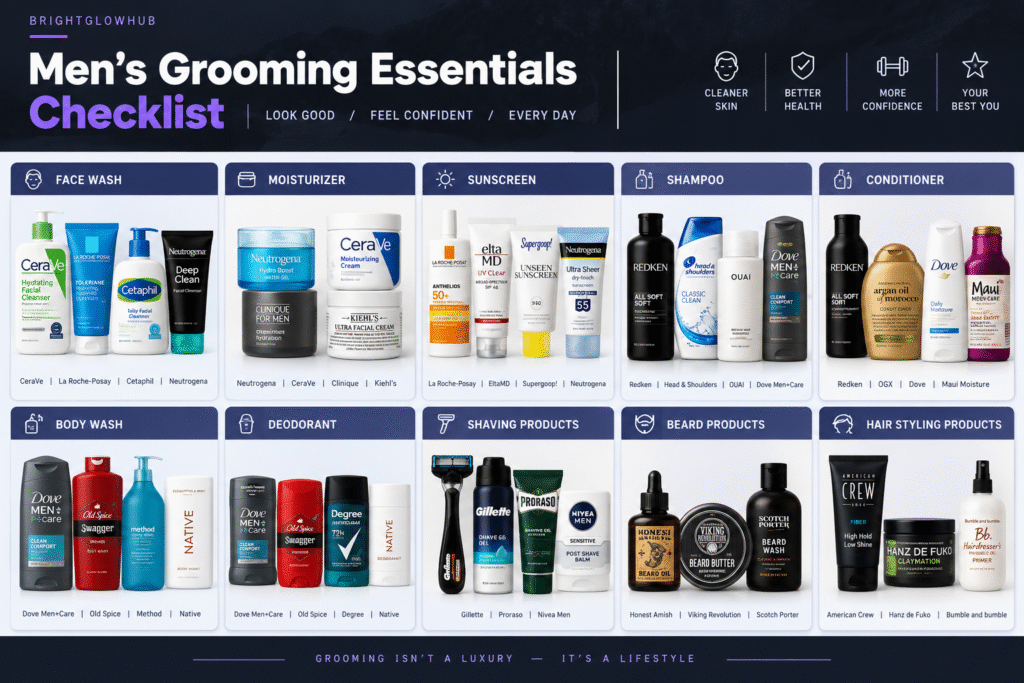
Once you’ve got the basic categories down, choosing specific products within each one is really about matching the formula to your individual needs rather than chasing whatever’s trending.
Major categories worth thinking through:
- Face wash
- Moisturizer
- Sunscreen
- Shampoo
- Conditioner
- Body wash
- Deodorant
- Shaving products
- Beard products
- Hair styling products
What I’d actually weigh when choosing within each category:
- Skin type — oily, dry, combination, or sensitive skin all respond differently to the same product
- Hair type — straight, wavy, curly, or coily hair all have different moisture and product needs
- Beard type — coarse or curly facial hair often benefits from more conditioning products than fine, straight facial hair
- Fragrance preference — scented versus fragrance-free matters more for guys with sensitive skin
- Ingredients — knowing what you’re putting on your skin, especially if you have a history of irritation or allergies
- Product purpose — understanding exactly what a product is meant to do, rather than assuming more products automatically means better results
- Budget — there’s genuinely good value at multiple price points, not just at the top
- Ease of use — a great product you won’t actually use consistently isn’t as useful as a simpler one you will
“Best” really does depend on the individual here. A heavy, rich moisturizer that works great for dry skin can feel uncomfortable and greasy on oily skin, and vice versa. I break down specific product recommendations by category in [Best Men’s Grooming Products].
Electric Trimmers for Men
An electric trimmer is one of the more versatile tools in a men’s grooming kit, useful well beyond just beard maintenance.
Common uses:
- Beard trimming and shaping
- General facial hair maintenance
- Neckline cleanup
- Sideburn maintenance
- Body grooming, depending on the model
- Hairline maintenance, for some guys
What to actually look for:
- Adjustable guards — lets you dial in different lengths without buying multiple tools
- Battery life — matters more if you travel often or don’t want to deal with constant charging
- Charging options — USB charging tends to be more convenient than proprietary charging docks
- Waterproofing — useful if you prefer trimming in the shower or want easier cleanup
- Blade quality — stainless steel or self-sharpening blades tend to hold up better over time
- Ergonomics — a trimmer that’s awkward to hold leads to uneven results, especially around the jawline and neck
- Cleaning requirements — some models are easier to rinse and maintain than others
- Attachments — multiple guard lengths or specialized heads add versatility, assuming you’ll actually use them
It’s worth understanding the difference between a dedicated beard trimmer and a more versatile multi-grooming device. A beard trimmer is usually optimized specifically for facial hair precision, while a multi-grooming device often includes attachments for body hair, nose and ear hair, and sometimes head hair, trading some precision for broader versatility. Which one makes sense depends on how much of your grooming routine you want one tool to cover. I go into specific trimmer comparisons in [Best Electric Trimmers for Men].
Best Grooming Tools for Men
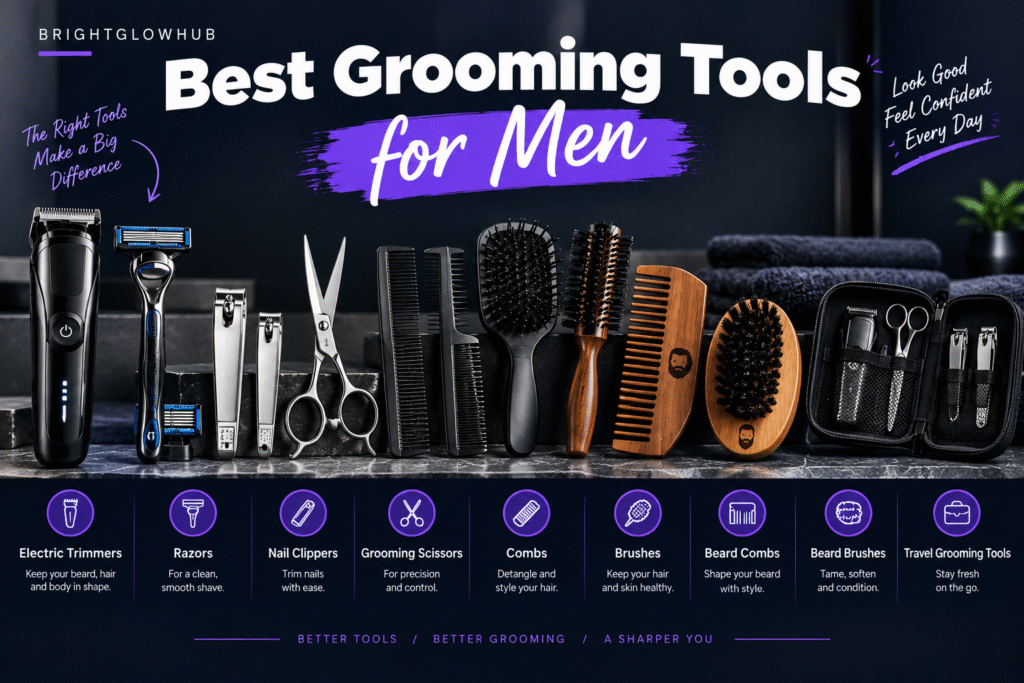
Beyond trimmers, there’s a broader category of tools worth understanding, even though most men won’t need every single one.
Useful grooming tools include:
- Electric trimmers
- Razors
- Nail clippers
- Grooming scissors
- Combs
- Brushes
- Beard combs
- Beard brushes
- Travel grooming tools
When choosing tools, I’d think through:
- Durability — cheap tools tend to dull, break, or wear out faster, costing more in replacements over time
- Comfort — a tool that’s uncomfortable to hold or use regularly tends to get neglected
- Precision — matters more for tools used near sensitive areas, like razors and nose/ear trimmers
- Ease of cleaning — tools that are hard to clean tend to accumulate buildup, which affects both performance and hygiene
- Portability — relevant if you travel frequently
- Intended use — a tool built for one specific job (like a dedicated nose trimmer) usually outperforms a multi-purpose tool trying to do everything
I wouldn’t assume every man needs the full list here. A guy with very short hair and no beard has little use for a beard comb or brush. The goal is building a toolkit around what you actually use, not collecting every available option.
Best Men’s Grooming Products Under $50
One thing I’d push back on is the assumption that a solid grooming routine requires expensive products. A useful routine really comes down to matching the right formula to your needs, not the price tag attached to it.
Here’s a practical way to think about prioritizing purchases by budget tier:
Under $15 — Basic essentials: a solid cleanser, a simple moisturizer, a basic deodorant, or a reliable nail clipper. This tier covers the fundamentals without much financial commitment.
$15–$30 — Better-quality individual products: more targeted formulas, slightly higher-quality ingredients, or a step up in a specific category like sunscreen or shaving cream.
$30–$50 — Higher-value tools or multi-product options: this is often where a decent electric trimmer or a small grooming kit becomes realistic, assuming you’re comparing based on actual value rather than just price.
I wouldn’t treat these price brackets as rigid rules, and I’d avoid assuming higher price automatically means better quality — it often comes down to brand positioning as much as actual formulation differences. When evaluating a purchase at any price point, I’d weigh:
- Price relative to what you’re actually getting
- Quality — does the formulation or construction match the price
- Longevity — how long a product or tool realistically lasts with regular use
- Versatility — can it serve multiple purposes or only one narrow one
- Cost per use — a slightly pricier product that lasts twice as long can be better value than a cheaper one you’ll replace twice as often
- Replacement cost — relevant for tools with consumable parts, like razor blades or trimmer attachments
A genuinely useful grooming routine absolutely fits under $50 for most core essentials, especially if you prioritize versatile products over specialized ones you’ll rarely use. Specific budget-friendly picks are covered in more depth in [Best Men’s Grooming Products Under $50].
How to Build a Men’s Grooming Kit From Scratch
If I were starting completely from zero, here’s roughly how I’d approach it in stages:
Starter level — Focus purely on basic necessities: a cleanser, a moisturizer, sunscreen, deodorant, and a reliable razor or trimmer depending on your facial hair preference. This covers the fundamentals most men need regardless of specific hair or skin type.
Intermediate level — Start adding products based on your specific situation: beard-specific products if you’re growing facial hair, more targeted hair-care products if you have a specific hair type or scalp concern, more tailored skincare if you’re dealing with something like oiliness or sensitivity, and body-grooming tools if that’s part of your routine.
Advanced level — Add specialized tools and products only once you’ve identified an actual need for them, rather than buying ahead of an issue that may never come up. This might include targeted skincare treatments, higher-end tools, or niche products suited to a specific concern.
The key idea here is building the kit around your actual routine as it develops, rather than buying everything at once based on a generic list. A lot of wasted money in grooming comes from guys buying products for a routine they don’t actually have yet.
Morning Grooming Checklist
A realistic morning routine doesn’t need to include every possible step. Here’s a reasonable framework, with the understanding that not every man needs every item:
- Shower/body care
- Face cleansing, if part of your routine
- Moisturizer
- Sunscreen
- Hair styling
- Beard maintenance, if applicable
- Deodorant
- Fragrance, if desired
For most guys, the non-negotiable items here are deodorant and some form of sun protection on exposed skin — everything else can flex based on personal preference and how much time you have.
Night Grooming Checklist
An evening routine tends to be simpler, and mostly focused on removing the day’s buildup and maintaining tools:
- Cleansing — removing dirt, oil, and sunscreen buildup from the day
- Skincare — a nighttime moisturizer or any targeted treatments
- Beard care — a quick comb-through or oil application if you have facial hair
- Hair care — not always necessary nightly, but worth doing after workouts or heavy sweating
- Grooming tool maintenance — rinsing and drying razors or trimmer blades to extend their lifespan
Keeping this routine simple makes it more likely you’ll actually stick with it consistently, which matters more than how comprehensive it looks on paper.
How to Choose Grooming Products
When evaluating any new product, I’d run through this general framework:
- Purpose — what is this product actually meant to do, and do you need that
- Skin type — oily, dry, combination, sensitive
- Hair type — relevant for shampoo, conditioner, and styling products
- Beard type — coarse, fine, curly, patchy
- Ingredients — particularly relevant if you have sensitivities or specific skin concerns
- Fragrance — scented or unscented, and whether that matters for your skin
- Sensitivity — patch-testing new products is a reasonable habit, especially for facial products
- Product size — travel-size versus full-size, depending on your use case
- Price — relative to the value and how often you’ll use it
- Brand reputation — consistency across reviews and product lines
- Reviews — genuine customer feedback often reveals fit, scent, and performance details marketing copy won’t
- Return policy — useful for products you’re trying for the first time
- Replacement frequency — how often you’ll need to repurchase, which affects long-term cost
I wouldn’t recommend buying a product simply because it’s trending or heavily marketed. The approach I prefer is starting with your actual needs and working outward from there, rather than starting with a popular product and hoping it fits.
What Grooming Products Do Men Actually Need?
Breaking this down into tiers can help prevent overspending on things that sound useful but rarely get used.
Essential — Products most men can reasonably consider core to a routine: cleanser, moisturizer, sunscreen, deodorant, and some form of hair cleansing product.
Useful — Products that depend heavily on individual habits: beard-specific products for guys with facial hair, body-specific tools for guys who body-groom, targeted skincare for specific skin concerns.
Optional — Products that are largely preference-based: fragrance, specialty styling products, luxury or premium versions of products where a basic formula would do the job just as well.
If you’re trying to avoid overspending, I’d start with the essential tier, add from the useful tier based on your actual situation, and treat the optional tier as genuinely optional rather than something to feel obligated to buy.
Common Men’s Grooming Mistakes
A few patterns worth avoiding:
- Buying too many products without a clear plan for how they fit your routine
- Choosing products without understanding their actual purpose
- Using more product than necessary, which wastes money and doesn’t improve results
- Ignoring expiration dates or usage instructions, especially for skincare and sunscreen
- Not cleaning grooming tools regularly, which affects both performance and hygiene
- Continuing to use dull razor or trimmer blades, which can lead to irritation and uneven results
- Neglecting sunscreen, despite it being one of the more evidence-backed daily habits for long-term skin health
- Ignoring ongoing skin or scalp irritation rather than adjusting products or checking in with a dermatologist
- Using someone else’s grooming tools, particularly razors, which raises hygiene concerns
- Choosing products based primarily on price (high or low) rather than whether they actually fit your needs
On the sunscreen point specifically, the American Academy of Dermatology recommends using a broad-spectrum sunscreen of SPF 30 or higher daily, since consistent use is one of the more well-supported habits for reducing long-term sun damage and skin cancer risk. It’s a small daily habit that a lot of grooming routines skip entirely.
How to Create a Travel Grooming Kit
A compact, well-thought-out travel kit saves a lot of hassle, especially for shorter trips where checked luggage isn’t practical.
Worth including:
- Travel-size versions of your core products (cleanser, moisturizer, sunscreen)
- A compact or travel-friendly trimmer, if you’ll need one
- Razor, with blade protection for safe packing
- Toothbrush and toothpaste, if not already part of your general travel bag
- Deodorant
- Basic skincare essentials
- Comb
- Nail clippers
If you’re flying, keep in mind that liquid restrictions can apply to grooming products, and these rules can change. I’d recommend checking current TSA or airline-specific requirements before packing, rather than assuming your usual routine will fit without adjustment.
Frequently Asked Questions
What are the essential grooming products every man should own?
At minimum: a cleanser, a moisturizer, sunscreen, deodorant, and a basic hair-cleansing product. Everything beyond that depends on facial hair, hair type, and personal routine.
What should be included in a men’s grooming kit?
A useful kit typically includes a trimmer or razor, a cleanser, a moisturizer, and possibly beard or hair products, depending on the kit’s focus. The best kits include items you’ll genuinely use rather than padding the box with extras.
Are expensive men’s grooming products worth it?
Not necessarily. Price doesn’t automatically correlate with quality or effectiveness. It’s more useful to evaluate ingredients, formulation, and how well a product fits your specific needs.
What is the best electric trimmer for men?
It depends on your specific use case beard-focused precision versus broader multi-grooming versatility. I cover detailed comparisons in [Best Electric Trimmers for Men].
How much should a man spend on grooming products?
There’s no fixed number, but a solid core routine is realistically achievable under $50 to $100 total, depending on how many categories you’re covering and the specific products chosen.
What grooming tools does every man need?
At minimum, some combination of a razor or trimmer and basic nail care tools. Beyond that, it depends on your facial hair, hair length, and personal grooming habits.
Can I build a complete grooming kit for under $50?
Yes, for most core essentials. Budget-friendly options exist across nearly every category, and prioritizing versatile products over specialized ones helps keep costs down.
What should I buy first if I’m new to men’s grooming?
Start with the basics: a gentle cleanser, a moisturizer, sunscreen, and deodorant. Add beard, hair, or body-specific products only once you’ve identified an actual need in your routine.
Conclusion
Building a solid men’s grooming routine doesn’t require dozens of expensive products or a bathroom counter that looks like a store display. The most practical approach is identifying your actual grooming needs based on your skin, hair, facial hair, and lifestyle and building a focused collection of reliable products and tools around them.
Start with the essentials, add from the useful category based on your specific routine, and treat anything optional as genuinely optional rather than something you feel obligated to own. A well-chosen set of men’s grooming essentials, used consistently, will almost always outperform a crowded shelf of products you never quite get around to using.
This article is for general informational purposes only and isn’t a substitute for professional medical advice. If you’re dealing with persistent skin irritation, scalp issues, or any skin condition, please consult a board-certified dermatologist. For more, see our full [Disclaimer].