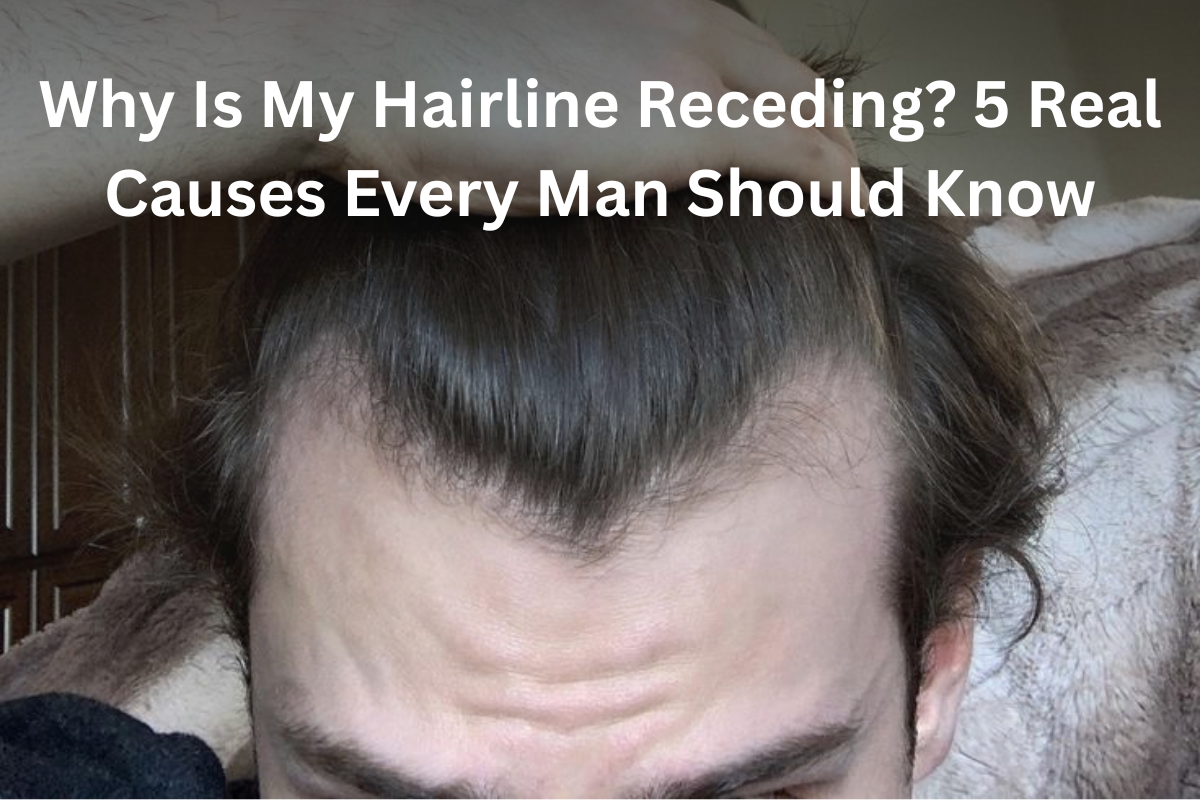
Noticing your hairline has moved back a little is one of those things that can catch you off guard. Maybe it’s a photo that looks different than you remember, or your barber says something offhand, or you just catch it in the mirror one day. Either way, it’s a common question, and one I think deserves a clear, honest answer rather than a scary one.
Let’s discuss about the topic which is faced by most of the men why is my hairline receding
One thing I quickly learned is that a receding hairline isn’t automatically a sign of something serious, and it’s also not always permanent or progressive. Let’s go through what’s actually behind it.
This post contains affiliate links. If you purchase through them, I may earn a small commission at no extra cost to you. I only recommend products I believe are genuinely worth considering
The Most Common Cause: Genetics
If I were trying to understand what was happening, this is where I’d start.
- The most common cause of a receding hairline is androgenetic alopecia, also known as male pattern hair loss
- It’s driven by genetic sensitivity to a hormone byproduct called DHT (dihydrotestosterone)
- Over time, DHT can cause certain hair follicles typically at the hairline and crown to gradually shrink and produce thinner, shorter hairs
- This can be inherited from either side of the family, not just your father’s side, despite the common myth
It’s Not Always Progressive
I wouldn’t assume every receding hairline is heading toward significant hair loss.
- Some guys naturally have a slightly higher hairline that isn’t actually receding — this is sometimes called a “mature hairline”
- A mature hairline often stabilizes and doesn’t continue progressing the way pattern hair loss does
- The difference usually comes down to whether it’s a one-time shift or an ongoing pattern over months and years
Other Possible Contributing Factors
I wouldn’t assume genetics is the only explanation in every case.
- Traction alopecia — hair loss from tension, sometimes linked to certain hairstyles that consistently pull on the hairline
- Stress-related shedding — can temporarily affect hair across the scalp, including near the hairline, though this type of shedding is usually more diffuse and temporary rather than a defined receding pattern
- Underlying health conditions — less common, but worth ruling out if hair loss is sudden or doesn’t fit the typical pattern
Signs That Point More Toward Pattern Hair Loss
If I were watching for early signs, here’s what I’d pay attention to:
- Gradual thinning specifically at the temples, rather than an even change across the whole hairline
- Hair in that area looking finer or more miniaturized over time
- The change happening slowly over months, not overnight
- A family history of similar hair loss patterns
What I Wouldn’t Do
- I wouldn’t panic over a single photo or one bad-lighting mirror moment
- I wouldn’t assume a slightly higher hairline automatically means ongoing hair loss
- I wouldn’t try to self-diagnose based on searching symptoms online
When It’s Worth Getting a Professional Opinion
I’m not going to try to diagnose your specific situation, and I’d encourage you not to self-diagnose either. That said, a few signs are worth bringing to a dermatologist rather than guessing:
- The change is progressing noticeably over a period of months
- It’s paired with thinning elsewhere on the scalp, not just the hairline
- It happened suddenly rather than gradually
- You’re simply unsure and want an actual professional assessment rather than a guess
A dermatologist can properly evaluate whether what you’re seeing is androgenetic alopecia, a naturally higher hairline, or something else, and can talk through options if treatment is something you’re interested in.
What I would recommend here — low-risk, directly tied to what the article actually covers:
- Silk or satin pillowcase — genuinely relevant to the traction alopecia point (less friction/pulling on hair at the hairline compared to cotton)
- Wide-tooth detangling comb or boar bristle brush — relevant to the same traction point, gentler on hair than aggressive brushing or tight styling tools
- A gentle, sulfate-free everyday shampoo — reasonable general-grooming pairing, not a treatment claim traction point, gentler on hair than aggressive brushing or tight styling tools
About the author

Hi, I’m Sahil sheikh, the founder of BrightGlowHub.
I’m not a dermatologist I’m someone who got tired of guessing at skincare and hair care and decided to actually learn how it works. This site is where I break down the basics in plain language, grounded in reputable sources like the American Academy of Dermatology, so you don’t have to wade through jargon or guesswork to build a routine that fits you.
I cover both skin and hair because they’re more connected than most sites treat them your scalp is skin, after all. When I share general guidance, it’s based on research and expert sources. When I talk about a product I’ve actually used, I’ll say so directly, and I’ll always disclose affiliate links clearly.
Questions or spot something I got wrong? Reach me at sahilsallu11@gmail.com I’d rather fix it than leave it.
sahil sheikh , Founder
I have also covered everything about hair loss and thinning in : Men’s Hair Loss & Thinning: Causes, Signs, and Treatment Options
The Bottom Line
A receding hairline is common, and in most cases, it comes down to genetics rather than anything you did wrong. The key is paying attention to whether it’s a one-time shift or an ongoing pattern and if you’re unsure, a dermatologist can give you a real answer instead of a guess from the mirror.
This article reflects general grooming tips and personal observations, not medical advice. Everyone’s hair and scalp are different, so what works for one person may not work the same way for you.