Table of Contents
I used to get so confused standing in the sunscreen aisle. Spray? Lotion? Stick? Which one should I buy? After years of testing all three types, I finally figured out what works best for different situations.
Today, I’m breaking down spray vs lotion vs stick sunscreen in the simplest way possible. No complicated science, just practical advice.
⚠️ Quick Note
I’m not a dermatologist. This is just my personal experience with different sunscreen types. For specific skin concerns, always consult a professional.
Understanding the Three Types
Let me explain what each type actually is.
Spray Sunscreen
What it is: Sunscreen that comes out as a mist from an aerosol or pump bottle. You spray it directly onto your skin like a body spray. Quick and easy.
Lotion Sunscreen
What it is: The classic cream or liquid sunscreen in a bottle or tube. You squeeze it out and rub it into your skin with your hands. This is what most people grew up using.
Stick Sunscreen
What it is: Solid sunscreen that looks like a big deodorant stick or lip balm. You glide it directly on your skin without using your hands. Super convenient.
Spray Sunscreen: The Quick Option
What Exactly Is Spray Sunscreen?
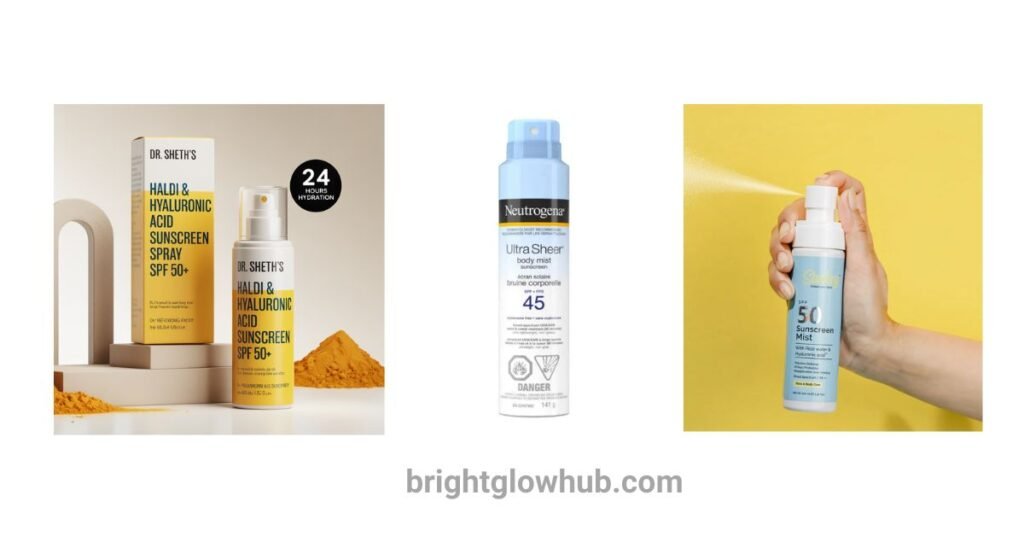
Spray sunscreen is liquid sunscreen in an aerosol can or spray bottle. You hold it a few inches from your skin and spray. The product comes out as a fine mist that covers your skin. It’s the fastest way to apply sunscreen to large areas.
Who Can Use It?
Perfect for:
- Athletes and active people
- People who hate the feel of rubbing in lotion
- Anyone covering large body areas quickly
Not ideal for:
- Very young babies (under 6 months)
- People with respiratory issues
- Anyone applying indoors in enclosed spaces
I use spray sunscreen mostly when I’m at the beach or going for outdoor sports.
Benefits of Spray Sunscreen
- Super fast application. I can cover my whole body in like 15 seconds.
- No messy hands. My hands stay clean, which is great when I’m already at the beach.
- Easy to reach your back. I can spray my shoulders and back without help.
- Great for hairy areas. Works well on legs, arms, and chest without pulling hair.
- Kids love it. My nephew thinks it’s fun, so he actually stays still for it.
Pros and Cons
Pros:
- Fastest application method
- No sticky hands
- Easy to carry around
- Perfect for body application
- Good for reapplying during sports
Cons:
- Can be uneven if you don’t rub it in
- Risk of inhaling it if sprayed near face
- Harder to tell if you missed spots
- More expensive per ounce
- Can’t take full-size bottles on planes
- Wastes product in windy conditions
What Age Should Use It?
- Kids 3 years and up: Great for body application, but spray into your hands first for their face.
- Teenagers and adults: Perfect for all uses.
- Babies under 6 months: Don’t use any sunscreen. Keep them in shade and covered.
- Babies 6 months to 2 years: Use lotion instead. Spray can be risky with inhalation.
- I started using spray sunscreen in my early twenties and haven’t looked back for body application.
Best Places to Use Spray Sunscreen
- Beach or pool: Absolutely perfect. Quick application before jumping in water.
- Outdoor sports: Great for soccer, running, hiking, cycling.
- Backyard activities: Gardening, playing with kids, BBQs.
- Large body areas: Arms, legs, back, chest.
Don’t use spray for:
- Face (too risky, can inhale it)
- Indoors
- Windy days (product blows away)
- Small targeted areas (wastes product)
Lotion Sunscreen: The Classic Choice
What Exactly Is Lotion Sunscreen?
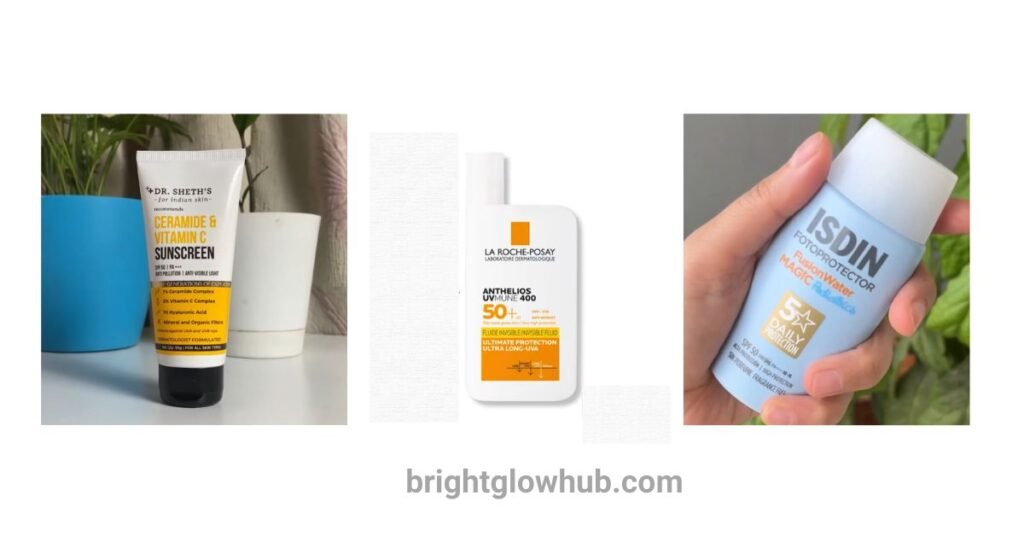
Lotion sunscreen is the traditional cream or liquid formula in bottles or tubes. You squeeze or pump it out, then rub it into your skin with your hands. This is what dermatologists usually recommend. It’s been around forever and there’s a good reason it works.
Who Can Use It?
Perfect for:
- Everyone, honestly
- Babies 6 months and older
- People with sensitive skin
- Anyone wanting thorough coverage
- Daily face protection users
Works for all ages and skin types.
I use lotion sunscreen on my face every single morning. It’s my go-to.
Benefits of Lotion Sunscreen
- You can see where you applied it. No guessing if you missed spots.
- Dermatologist recommended. Most skin doctors prefer this type.
- Moisturizing options available. Many lotions hydrate while protecting.
- Precise application. You control exactly where it goes.
- Best for faces. Safest and most effective for facial protection.
- More affordable. Usually cheaper per ounce than spray or stick.
Pros and Cons
Pros:
- Most reliable coverage
- Easy to see where you applied
- Works for face and body
- Most options available (tinted, moisturizing, etc.)
- Best value for money
- Available in all SPF levels
- Can be very moisturizing
Cons:
- Takes longer to apply
- Hands get messy and sticky
- Harder to reach your own back
- Some feel greasy or heavy
- Can leave white cast (mineral formulas)
- Need to wash hands after applying
What Age Should Use It?
All ages 6 months and up.
Babies, kids, teenagers, adults, elderly everyone can use lotion sunscreen safely. It’s the most universal option. I’ve been using lotion on my face since I was a teenager. Started with acne, needed sun protection.
Best Places to Use Lotion Sunscreen
- Face: Absolutely the best choice. Safe, effective, precise.
- Daily use: Perfect for your morning skincare routine.
- Full body at home: When you have time to apply properly.
- Babies and young kids: Safest option for little ones.
- Sensitive areas: Around eyes, on neck, décolletage.
- Under makeup: Most makeup-friendly option as a base.
Use lotion when:
- Applying to your face
- You want thorough protection
- You have time to rub it in properly
- You’re at home getting ready
Stick Sunscreen: The Convenient Option
What Exactly Is Stick Sunscreen?
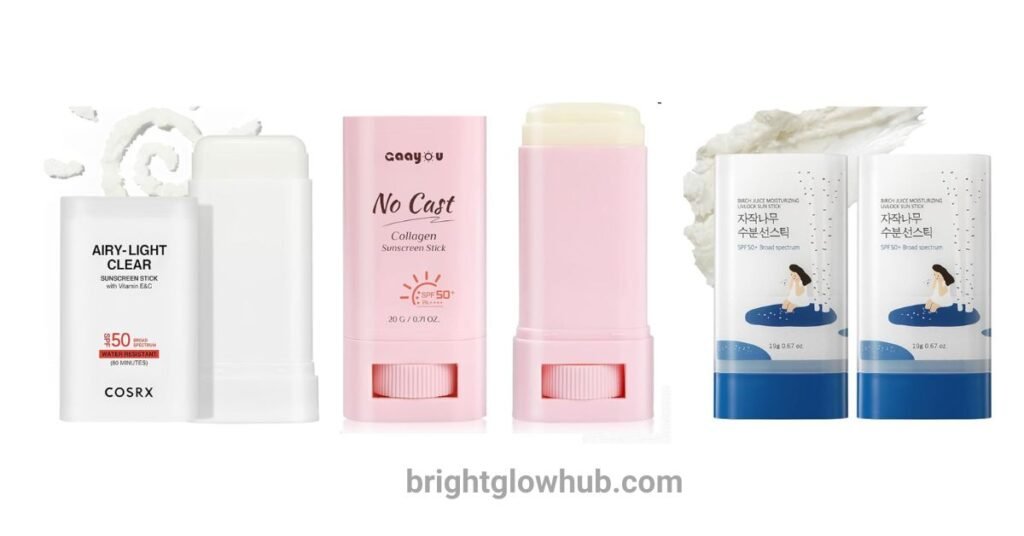
Stick sunscreen is solid sunscreen in a twist-up tube, like deodorant or a giant lip balm. You glide it directly onto your skin. No mess, no fuss. It’s the newest popular format and honestly, I love it for specific uses.
Who Can Use It?
Perfect for:
- Busy people who need quick touch-ups
- Makeup wearers
- Travelers
- Athletes
- People who want zero mess
Great for all ages, but kids might need help applying enough.
I keep a stick in my bag at all times for midday reapplication.
Benefits of Stick Sunscreen
- Zero mess. Your hands stay completely clean.
- Perfect for touch-ups. Reapply over makeup easily.
- Travel-friendly. Small, compact, TSA-approved size.
- Targeted application. Great for nose, ears, shoulders.
- Won’t spill or leak. Safe in bags and luggage.
- Quick and convenient. Apply in seconds without a mirror.
Pros and Cons
Pros:
- Completely mess-free
- Easiest to carry in purse or pocket
- Perfect for face touch-ups
- Works over makeup
- Precise application for small areas
- No risk of spilling
- Great for travel
- Easy to use one-handed
Cons:
- Takes forever to cover large areas
- More expensive per ounce
- Can tug on skin if you press hard
- Might not apply enough product
- Not great for hairy areas
- Small size runs out quickly
- Can melt in extreme heat
What Age Should Use It?
- Kids 5 years and up: Can learn to apply themselves with supervision.
- Teenagers and adults: Perfect for all uses.
- Young kids 2-5 years: Parents can apply, but lotion might be easier for full coverage.
- I started using stick sunscreen in my late twenties when I realized I needed to reapply during the day.
Best Places to Use Stick Sunscreen
- Face throughout the day: Perfect for reapplying over makeup.
- Targeted areas: Nose, ears, shoulders, chest, hands.
- On the go: Keep one in your car, purse, gym bag.
- Over makeup: The only format that works well for this.
- Sports: Quick touch-ups on face during breaks.
- High-risk spots: Areas that burn easily like your nose bridge.
Use stick sunscreen when:
- You’re wearing makeup
- You need quick face protection
- You’re traveling light
- You want zero mess
My Quick Comparison
Let me break this down super simply:
| Feature | Spray | Lotion | Stick |
|---|---|---|---|
| Best for | Body | Face & Body | Face touch-ups |
| Speed | Very fast | Moderate | Fast for small areas |
| Mess level | Low | Moderate | Zero |
| Coverage | Hard to see | Easy to see | Easy to see |
| Price | $$$ | $ | $$ |
| Travel | Bulky | Varies | Excellent |
Which One Should YOU Use?
Here’s my honest recommendation based on different situations.
For Your Face (Daily Use)
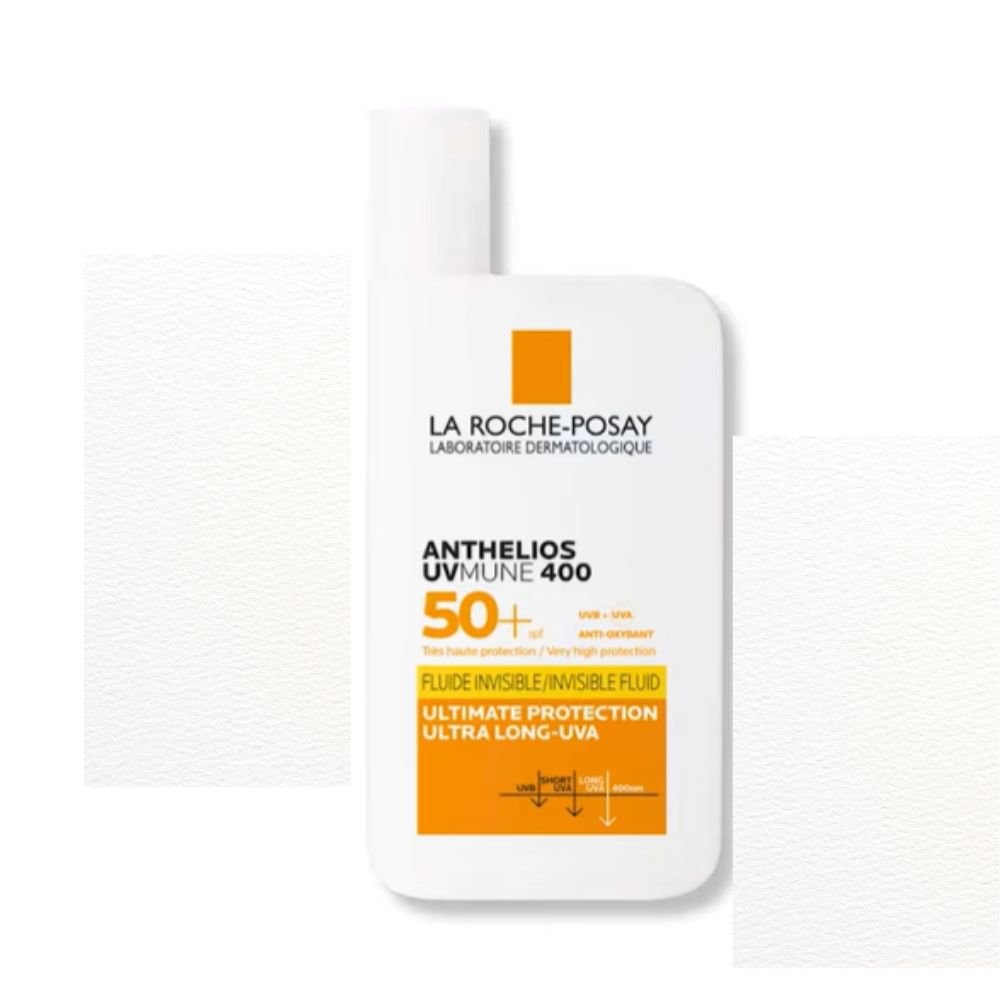
Use lotion sunscreen.
It’s the safest, most effective, and dermatologist-recommended option for daily facial protection. Apply it every morning as part of your skincare routine.
For Your Body (Beach/Pool)
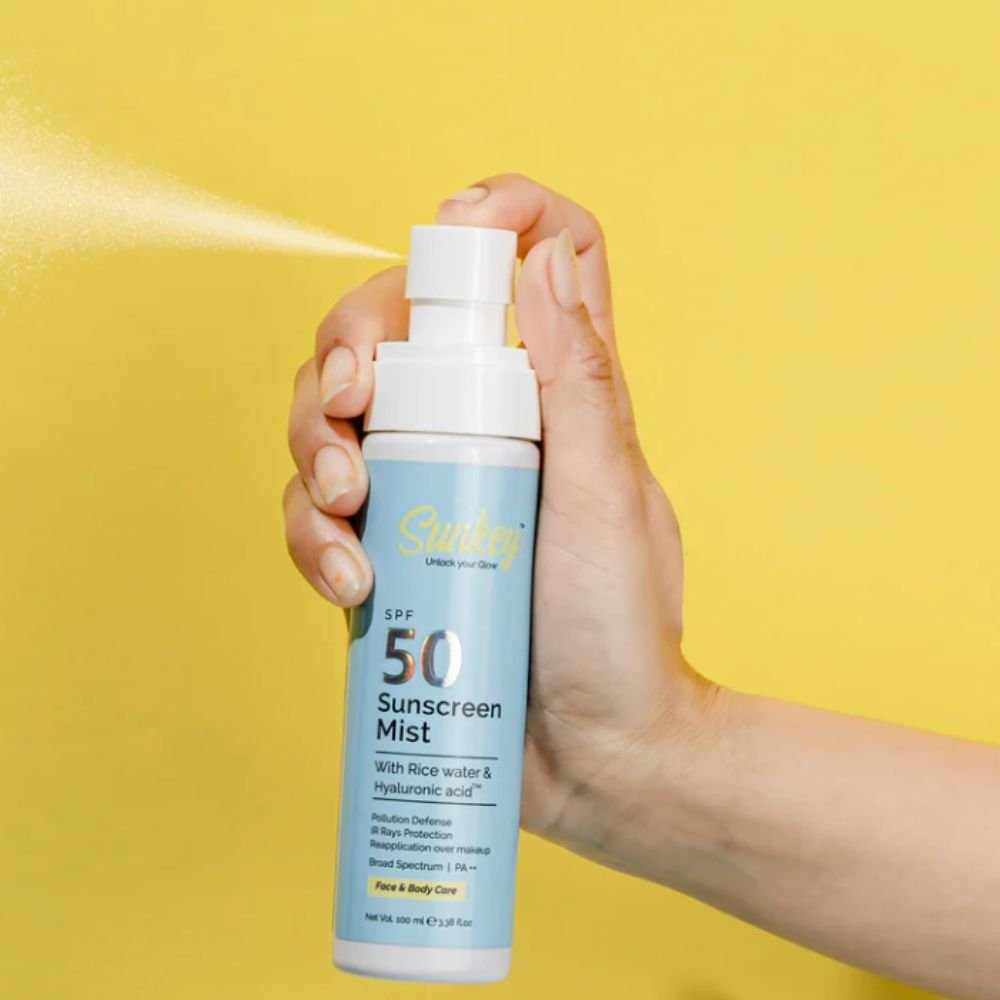
Use spray sunscreen.
It’s the fastest way to cover large areas before swimming or outdoor activities. Just make sure to rub it in after spraying.
For Touch-ups During the Day
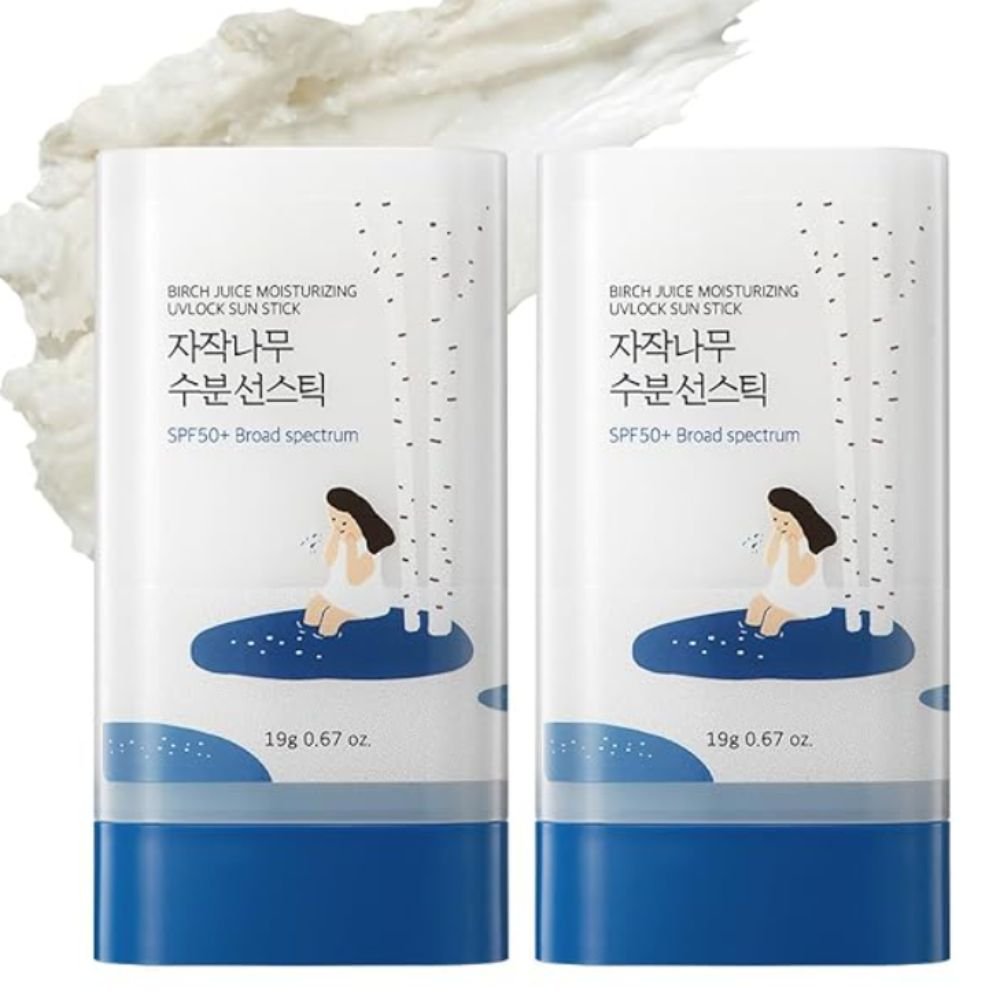
Use stick sunscreen.
Keep one in your bag for easy reapplication, especially if you wear makeup. Perfect for your face, neck, hands, and shoulders.
For Kids
Use lotion for face, spray for body.
Lotion on their face is safest (no inhalation risk). Spray on their arms, legs, and back is fastest and keeps them from getting fussy.

For Athletes/Sports

Use spray for initial application, stick for touch-ups.
Spray your body before starting, then use stick on your face during breaks. This combo approach works best.
Interesting Topics :
5+ Best Facial Cleansers for Oily Skin (That Actually Work)
How to Remove Blackheads from Your Face (+ My Honest Product Review)
Follow me On Quora : sahil sheikh
Why Listen to me

Written by Sahil sheikh with 2 years of experience in men’s skin care I have tried and tested many home remedies and skin care products on myself
I have helped over 10 individuals in my friends and family to overcome their skin care problem. I have been recommending skin care products for my college frinds according to their skin type and skin problem and it has helped them a lot
These post were shared in Reddit and got 20 upvotes as well
Updated on : 6 may 2026 Written By : sahil sheikh
My Personal Routine
Let me share what I actually do every day.
Morning (at home):
- Lotion sunscreen on my face (SPF 50)
- Takes 2 minutes, part of skincare routine
Beach/Pool days:
- Spray sunscreen on body before going
- Lotion on face
- Stick in my bag for reapplying
Sports/Hiking:
- Spray on body before starting
- Stick for face during activity
- Reapply every 2 hours
I own all three types because each has its perfect use case.
My Final Recommendation
Don’t choose just one type. Own all three.
Here’s what I suggest:
Buy a good lotion for daily face use. Use it every morning without fail.
Get a spray for beach/pool days. Keep it in your beach bag.
Keep a stick in your purse/car. For midday touch-ups wherever you are.
This three-format approach covers all situations.
Budget-friendly option:
- One good face lotion (use daily)
- One affordable body spray (occasional use)
- One travel stick (emergency touch-ups)
Total investment: Around $30-40 and you’re covered for months.
The Most Important Thing
Here’s what matters more than spray vs lotion vs stick sunscreen:
Actually using sunscreen every single day.
The best sunscreen is the one you’ll actually use consistently.
If you hate lotion texture, use spray. If spray feels wasteful, use lotion. If you’re always on the go, use stick.
Just use something. Every day. SPF 30 minimum. Reapply every 2 hours in sun.
That’s the secret to sun protection.
My Current Favorites
Here’s what I’m actually using right now:
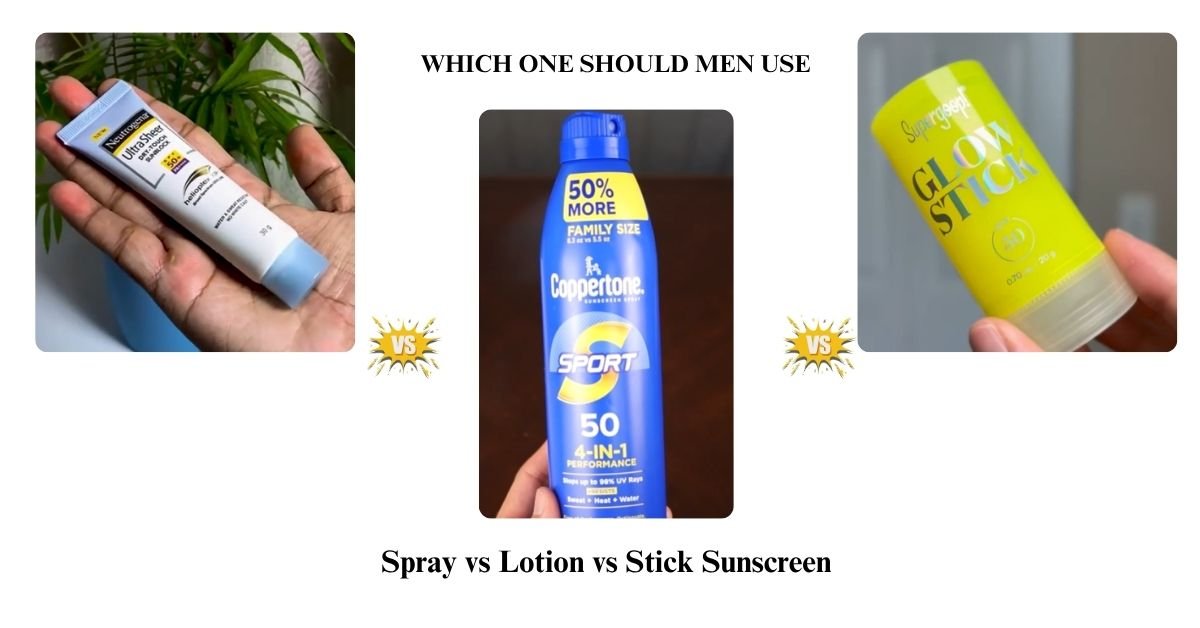
Lotion: Neutrogena Ultra Sheer for my face every morning
Spray: Coppertone Sport for beach days and hiking
Stick: Supergoop Glow Stick for midday touch-ups
These work for me. Your favorites might be different, and that’s okay.
Final Thoughts
The whole spray vs lotion vs stick sunscreen debate isn’t about which one is “best.” It’s about which one works best for each situation in your life. I use all three types regularly, and my skin thanks me for it.
The real question isn’t spray vs lotion vs stick.
The real question is: are you using sunscreen every day?
If yes, you’re already winning. If not, pick whichever format seems easiest for you and start today. Your future skin will thank you.
Disclaimer: I’m not a dermatologist or skincare professional. This is my personal experience only. For medical advice about sun protection and skin health, consult a board-certified dermatologist.